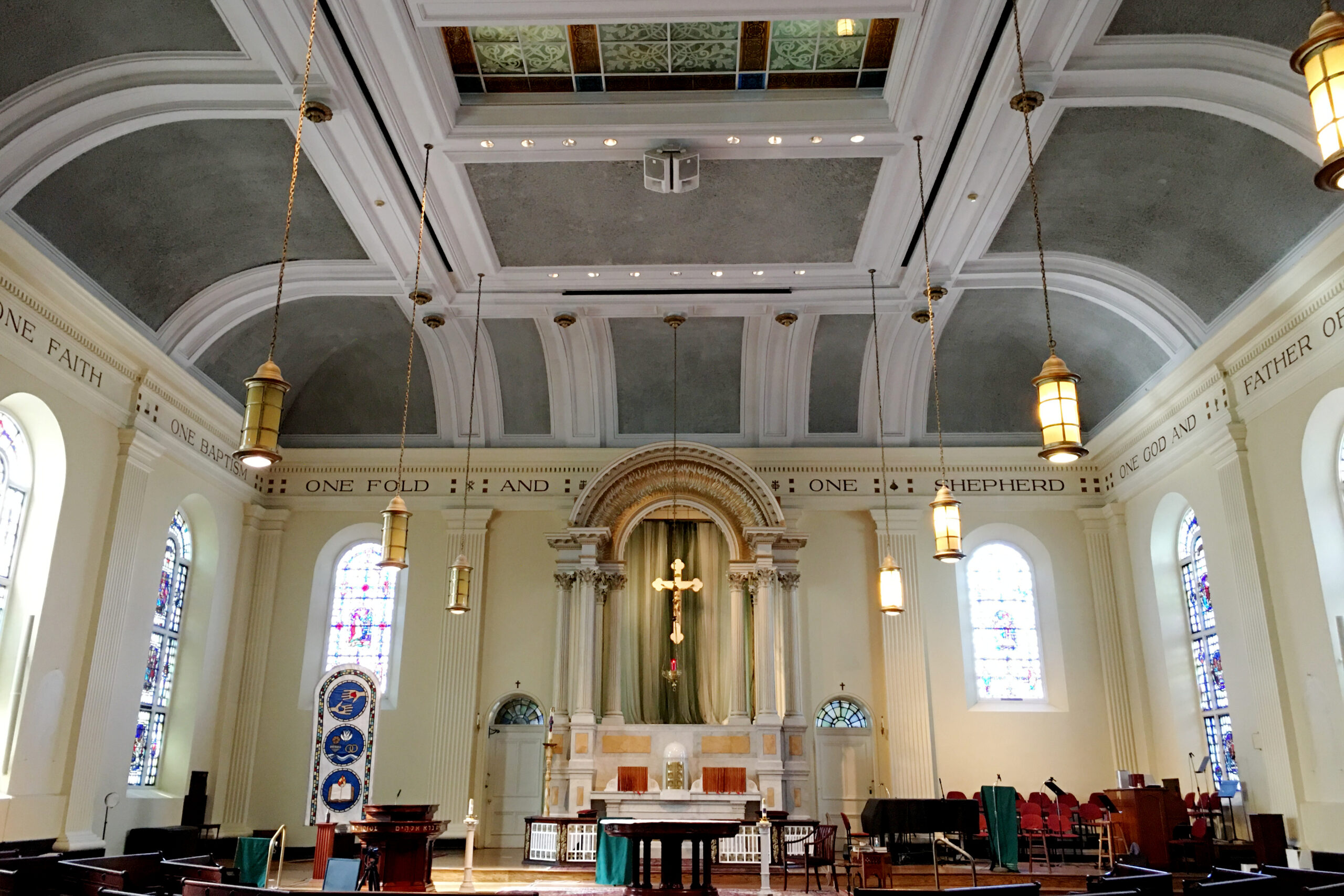
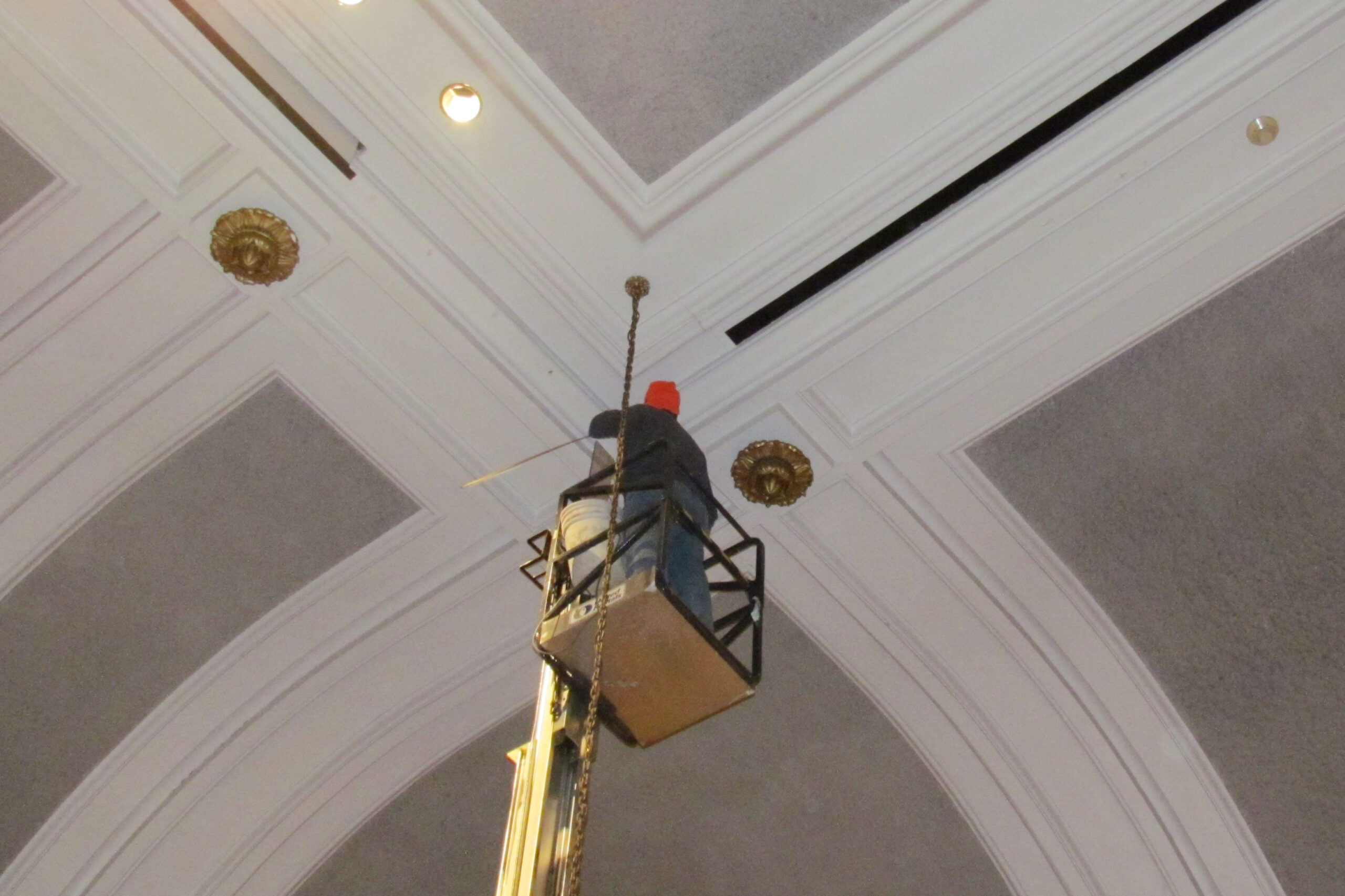
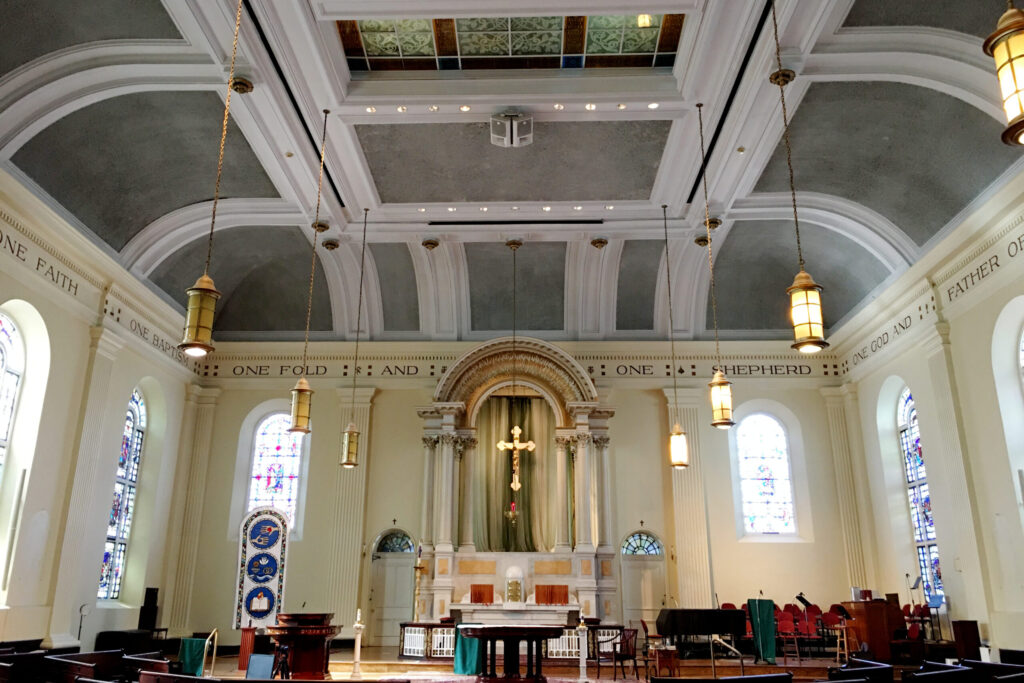
After detaching and moving all the pews, WEI’s conservator and masons surveyed the ceiling from above in the attic, and from below on rolling scaffold towers to determine if there was any additional damage to the plaster interior. WEI then submitted a report of the existing conditions and proposed repairs.
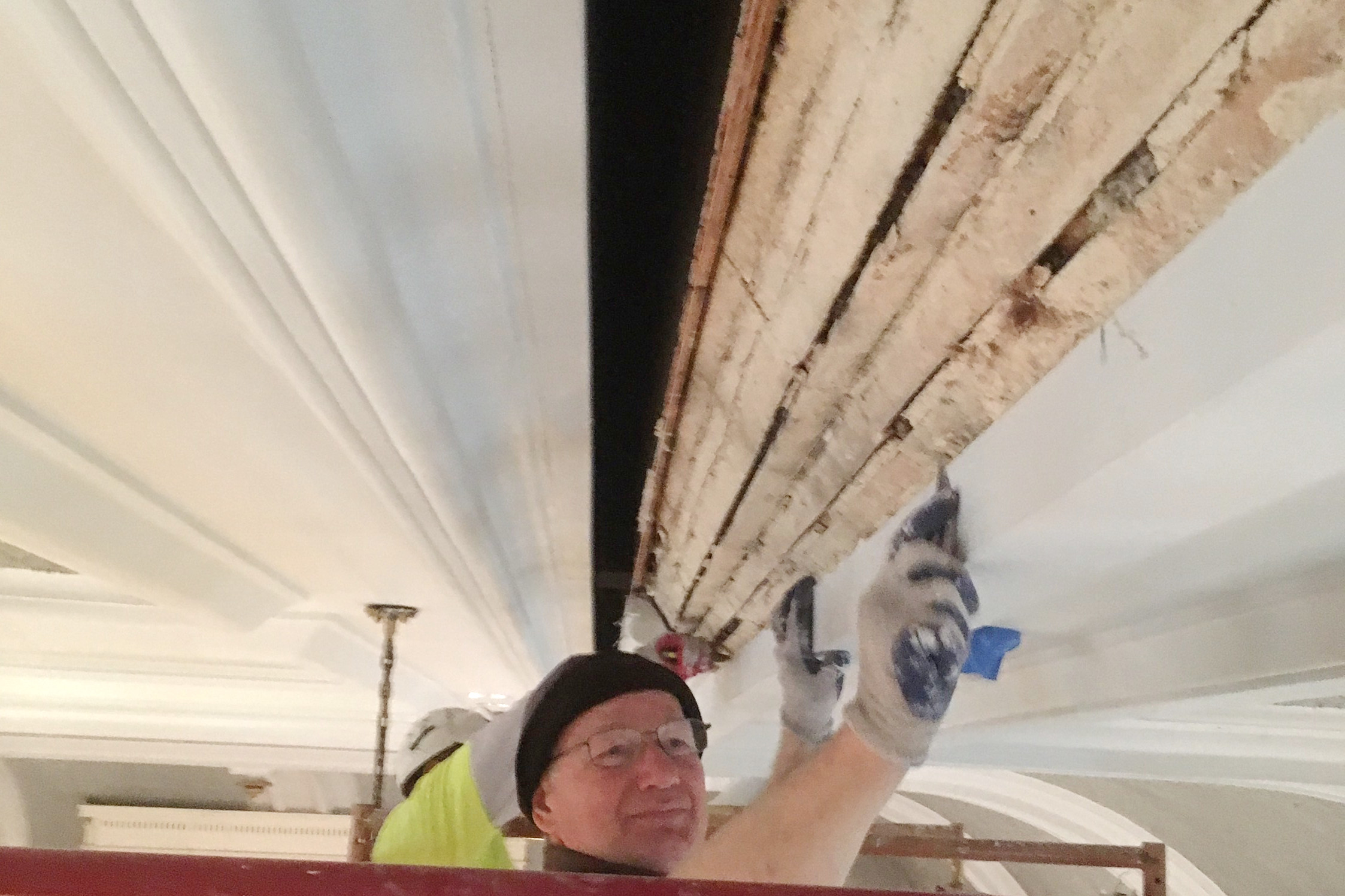
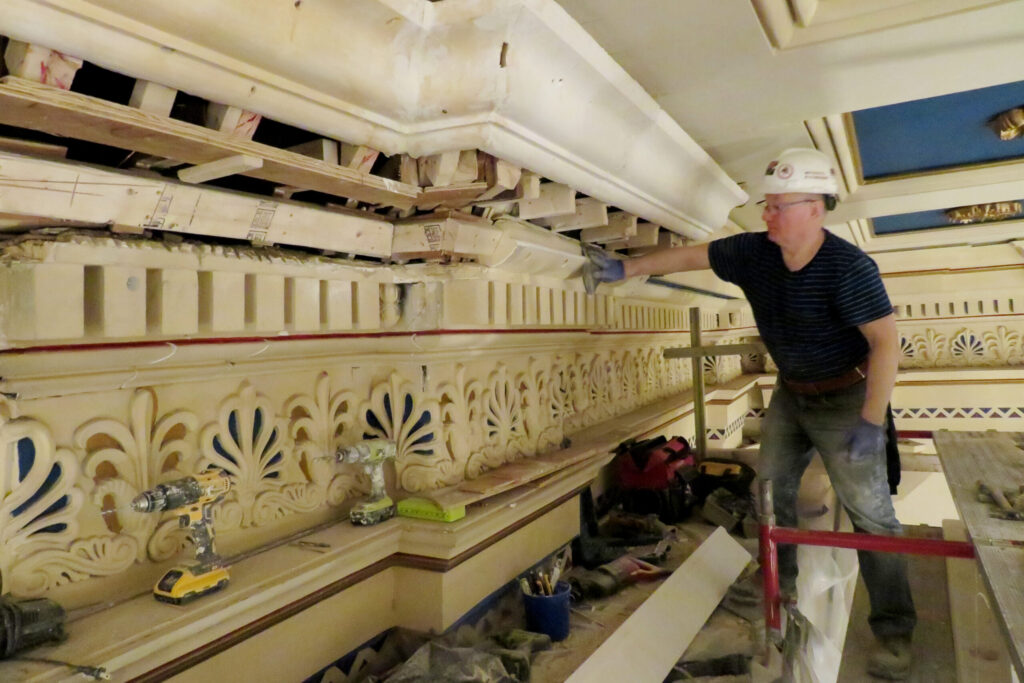
It became clear that the stability of the molding surrounding the laylight had been undermined by installation of an attic AC installation and diffusers. To repair the area, WEI first reinforced the remaining molding with stainless steel fasteners and plaster washers anchored into blocking that was added to the attic framing. Shop crafstmen then created two replica sections of molding and the crew installed them in the open areas. The countersunk fasteners were covered to camoflage the work.
The soffit molding at the perimeter of the sanctuary was severely cracked in several areas. The WEI shop fabricated over 100 linear feet of replacement soffit pieces to match the historic profile. Because much of the lath had deteriorated and was removed, the molding was made slightly thicker to make up for the missing volume. Blocking was added as needed to provide a solid support structure. The new molding was installed with stainless steel anchors and plaster washers, and the heads were also countersunk and covered.
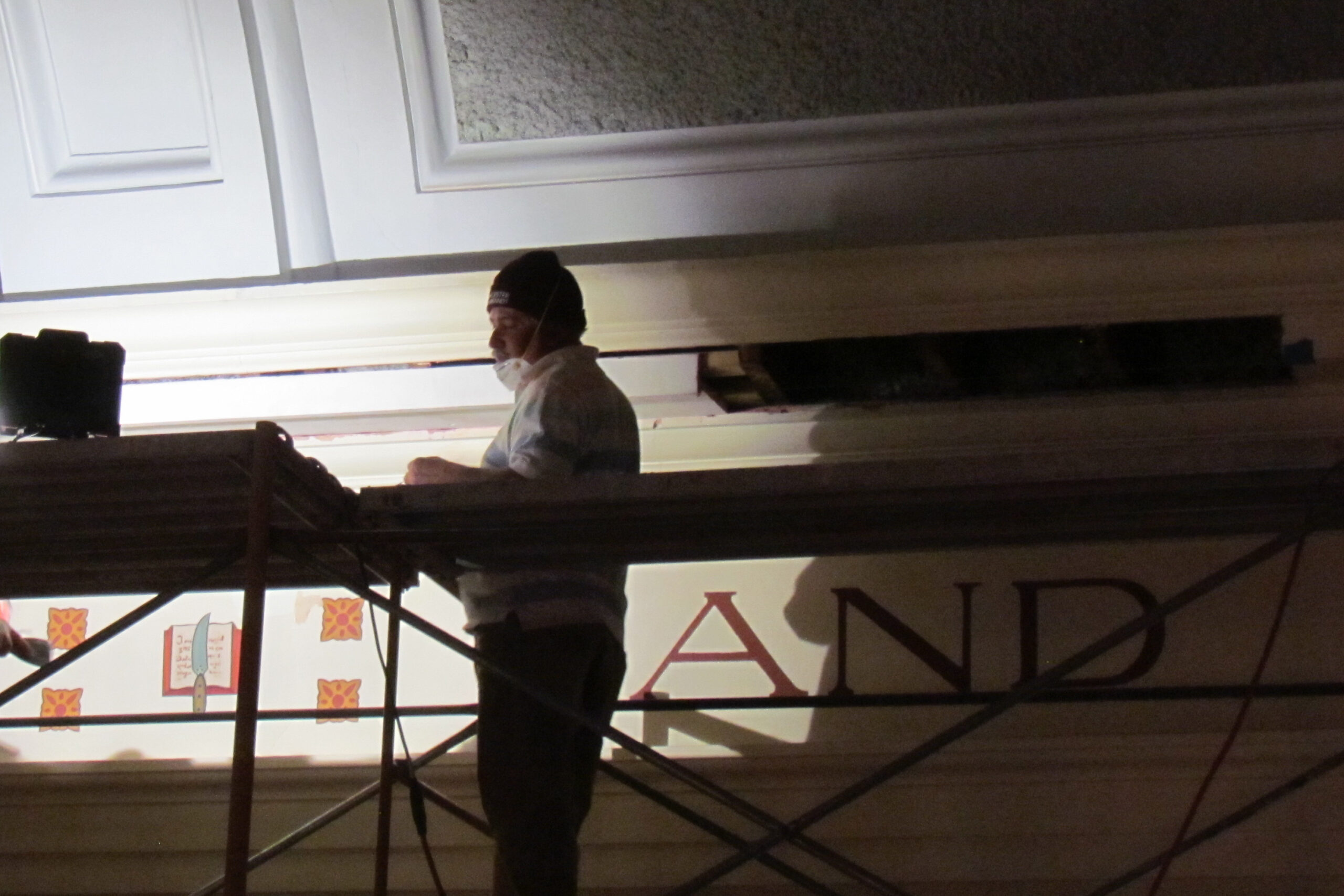
Wherever possible, the walls and molding were patched rather than replaced. Several cracked sections of the ceiling were reinforced and the fasteners covered. Once the damaged flat plaster on the walls were replaced, WEI repainted much of the interior, which included some of the lettering, patterns, and biblical motifs that decorated the soffit. Before the pews were moved back into place, multiple Dutchman repairs were made to the floor, and the entire floor was refinished.