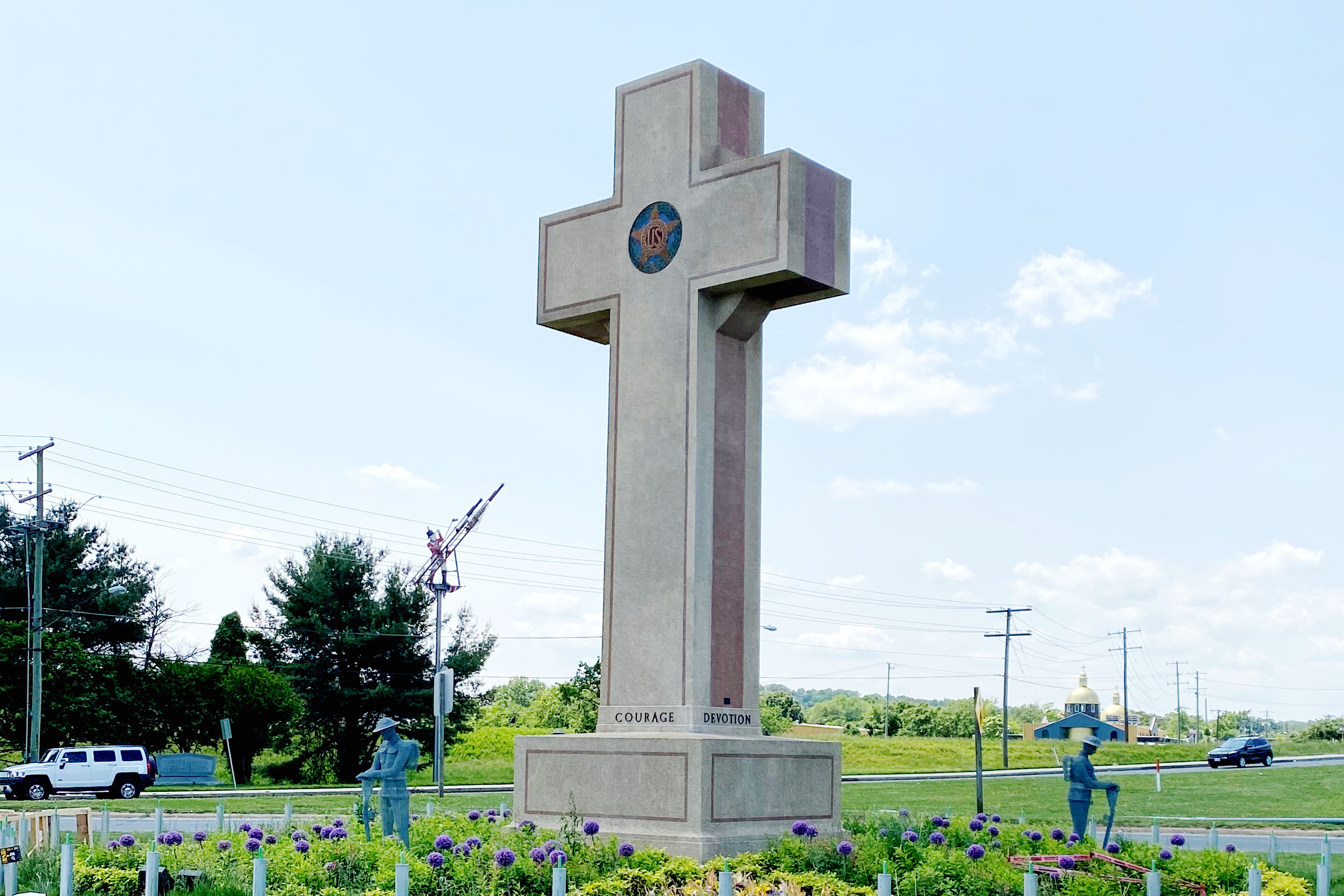
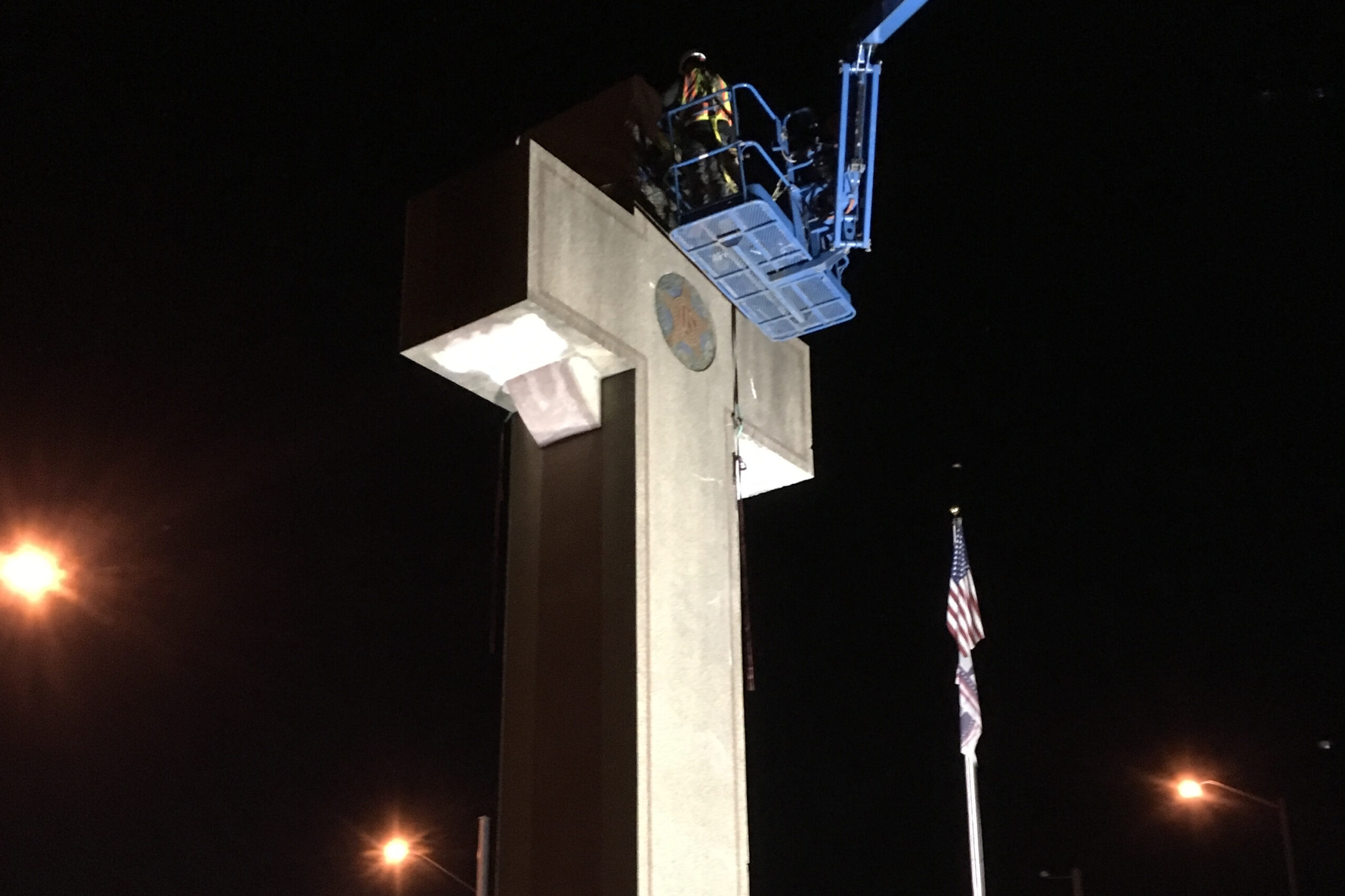
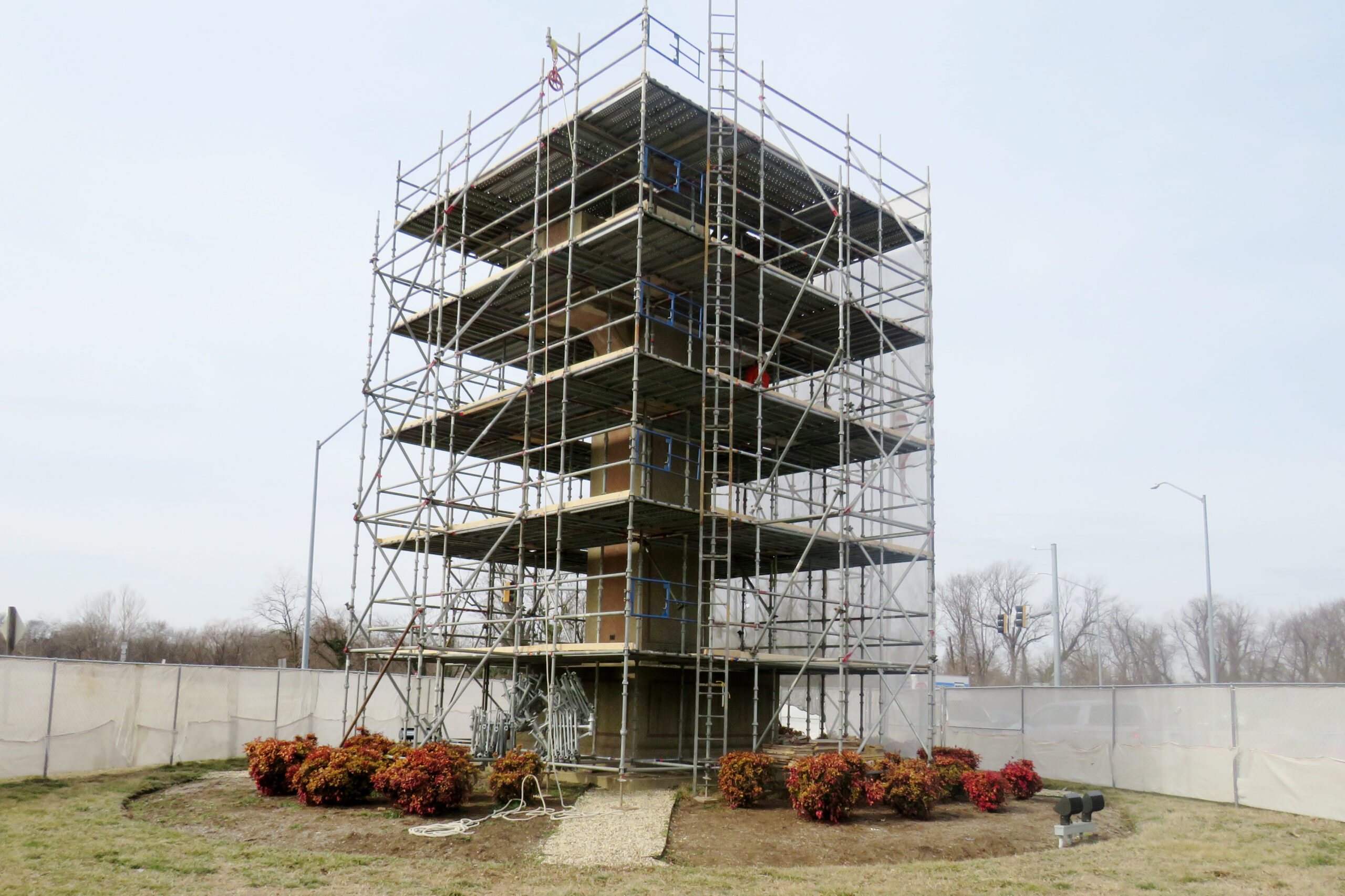
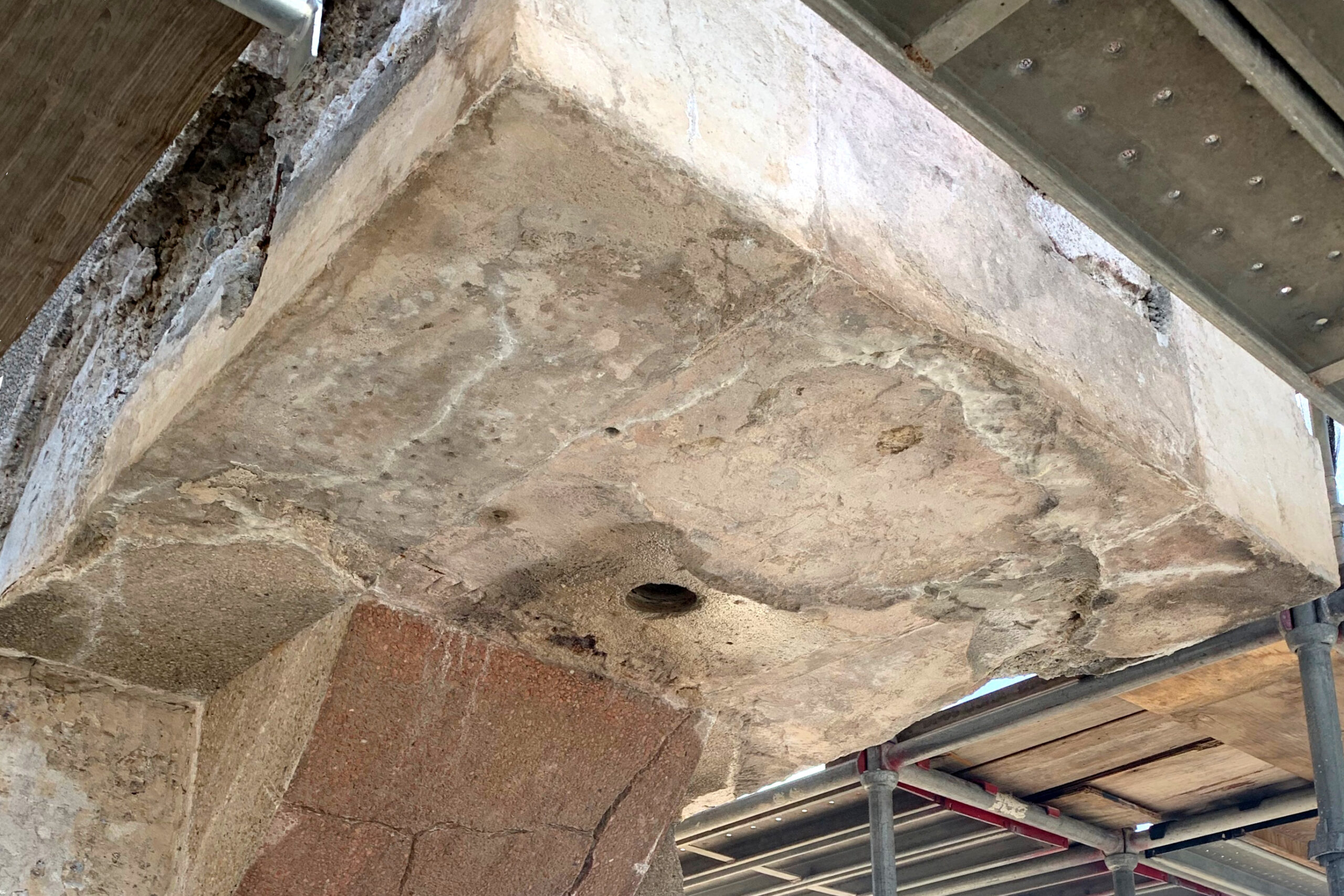
WEI began by employing several survey methods and sample testing to gain as much information as possible before starting construction. Those investigations provided direction on how to proceed with selective demolition of the unsound finish layers. This in turn revealed a few construction and weathering issues, such as honeycombing in the structural concrete, significant moisture on the interior, and ASR in the structural concrete.
Sample cores provided openings at the top, arms, and base to directly observe the interior and document its construction and condition. To help preserve the historic material, the interior surface was saturated with a chemical ASR treatment to convert the gel into a non-soluble compound. The conservation team designed and built a custom sprayer to prevent sending a person into the confined space.
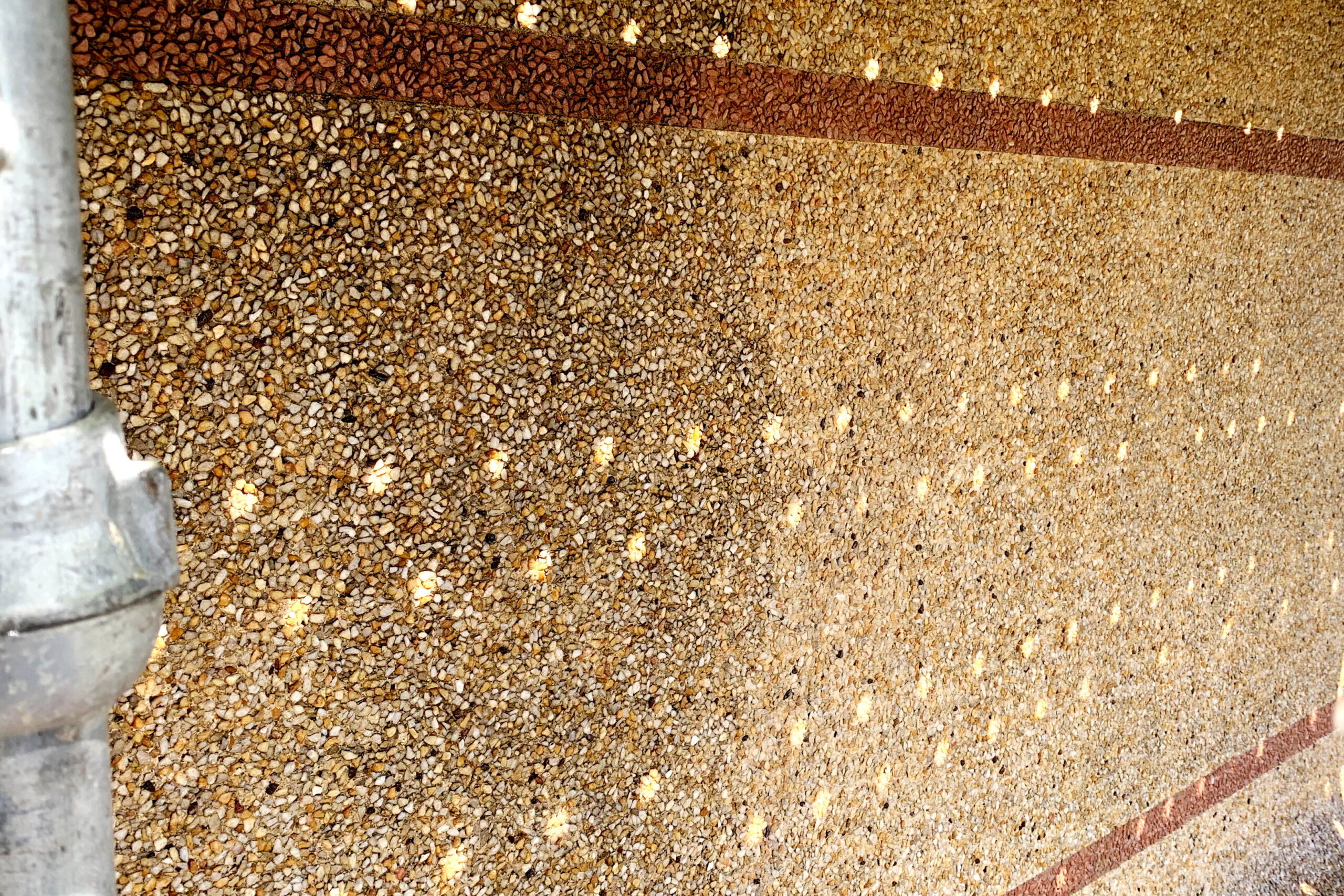
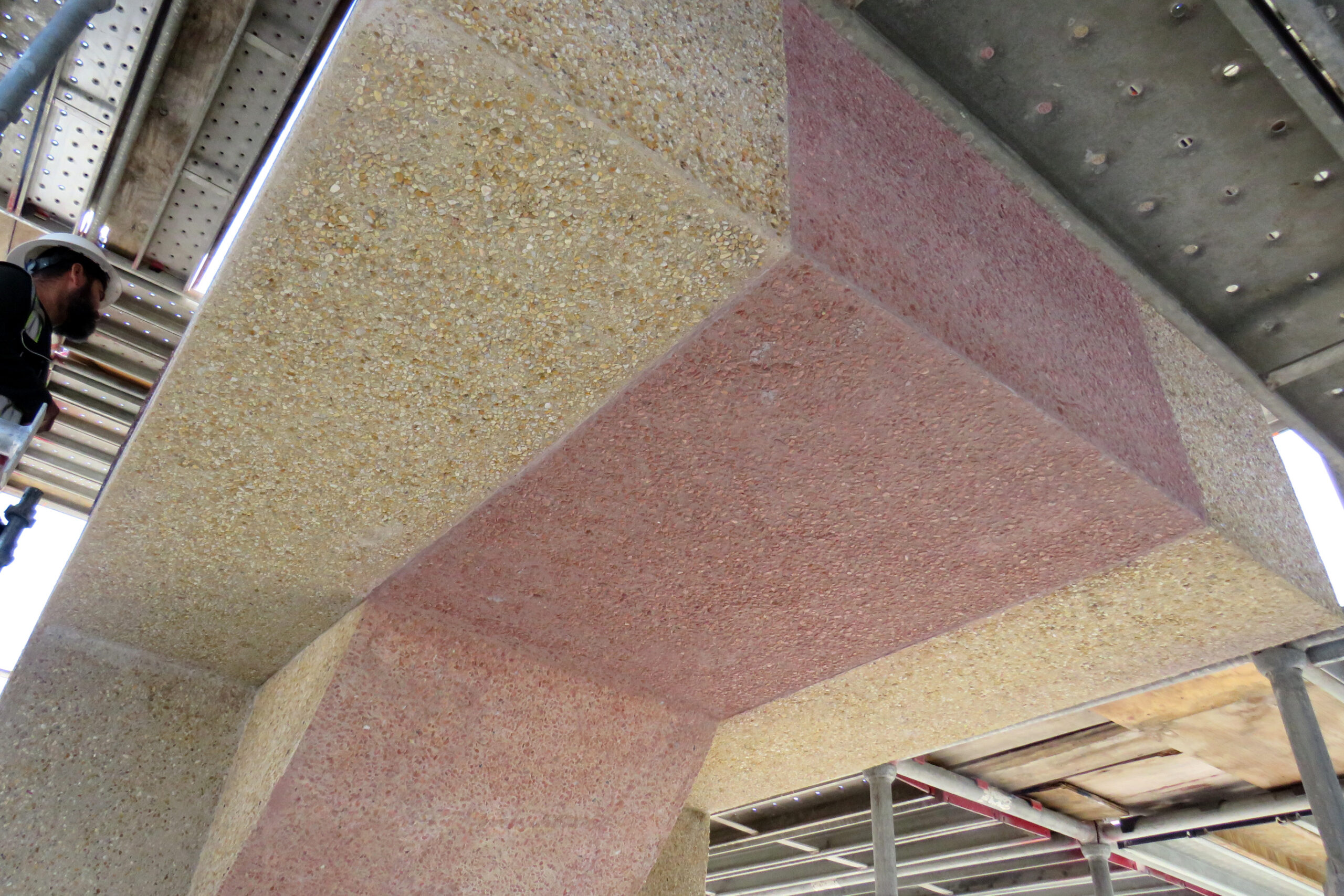
The finish layers were replaced using a combination of precast plates and troweled application, depending on location and size of the area. In some cases, aggregate was sorted by hand to achieve the right color mix. The pink aggregate was not available locally so matching stone was sourced from the west coast.
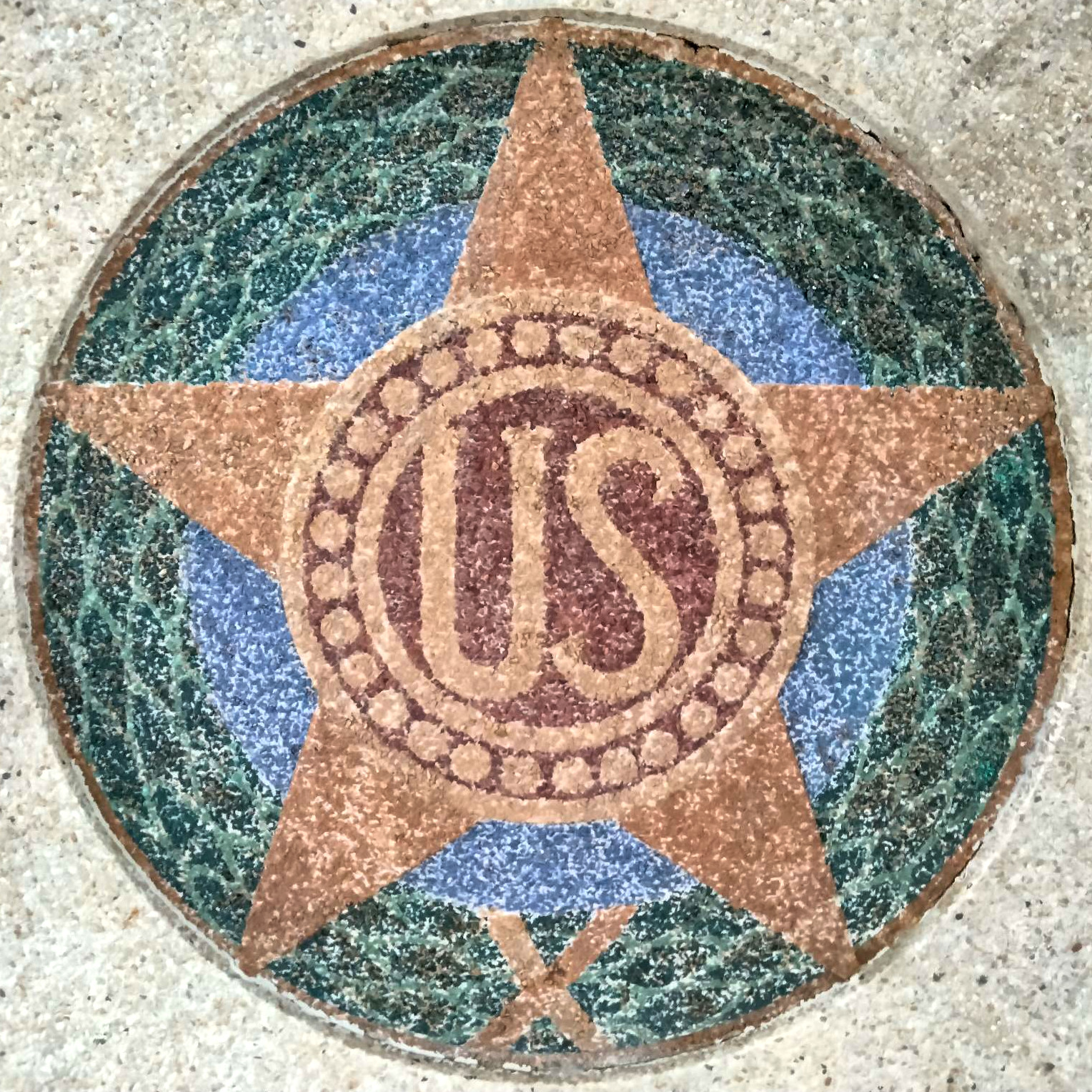
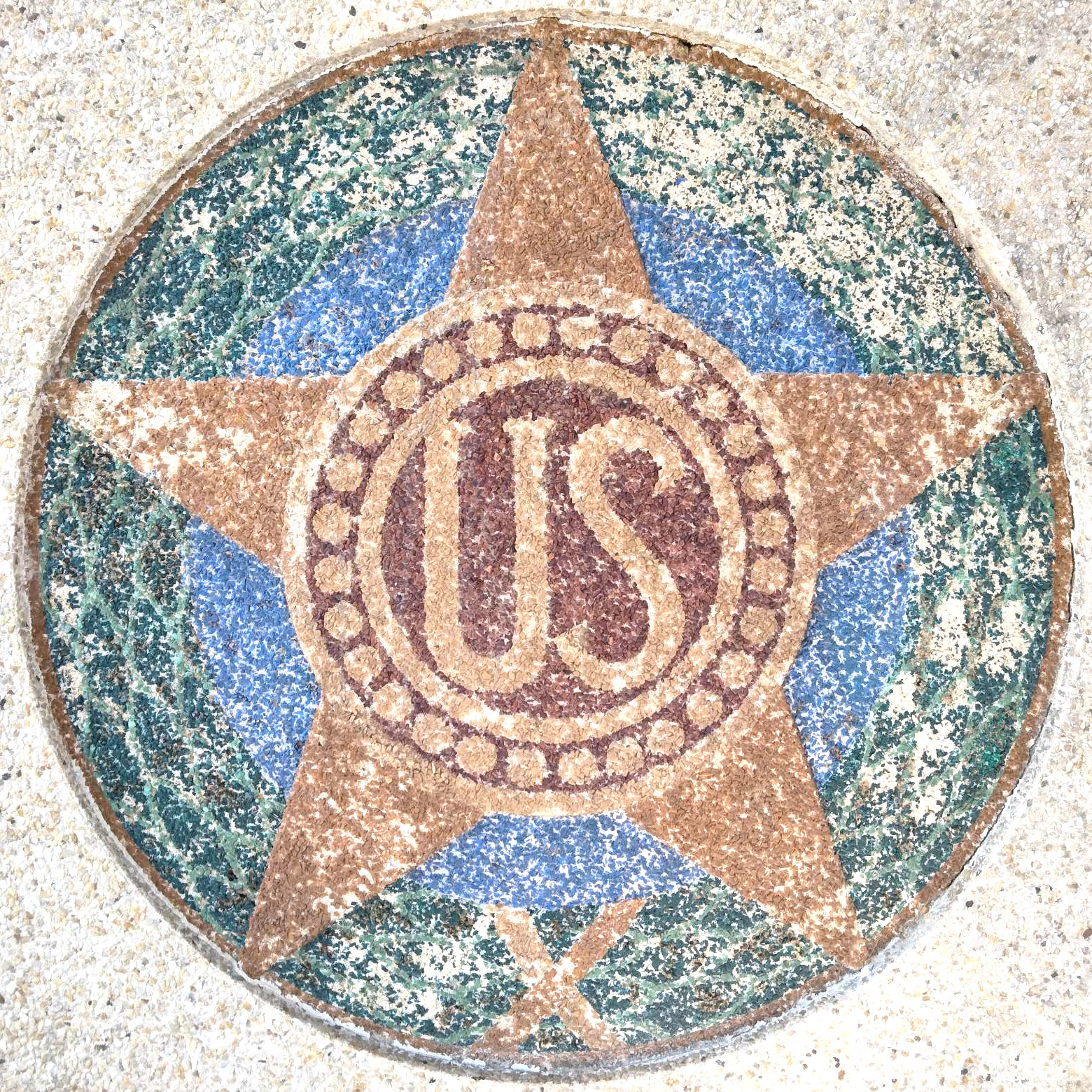
The American Legion medallions at the crossing were repaired using semi-precious stones to match the vivid colors. The bronze plaque and letters were removed, thoroughly cleaned, and the patina restored. A protective hot wax coating was applied to prevent corrosion.
To provide permanent ventilation, openings were left in the top and in the base where they would be impossible or difficult to see. Windy days push air down through the top and down into the shaft of the cross which escapes near the bottom. Otherwise, midday heat causes a chimney effect where air rises to the top. This provides a means for the humidity to escape and relieves the wet interior environment, allowing the monument to dry much more quickly after rain.