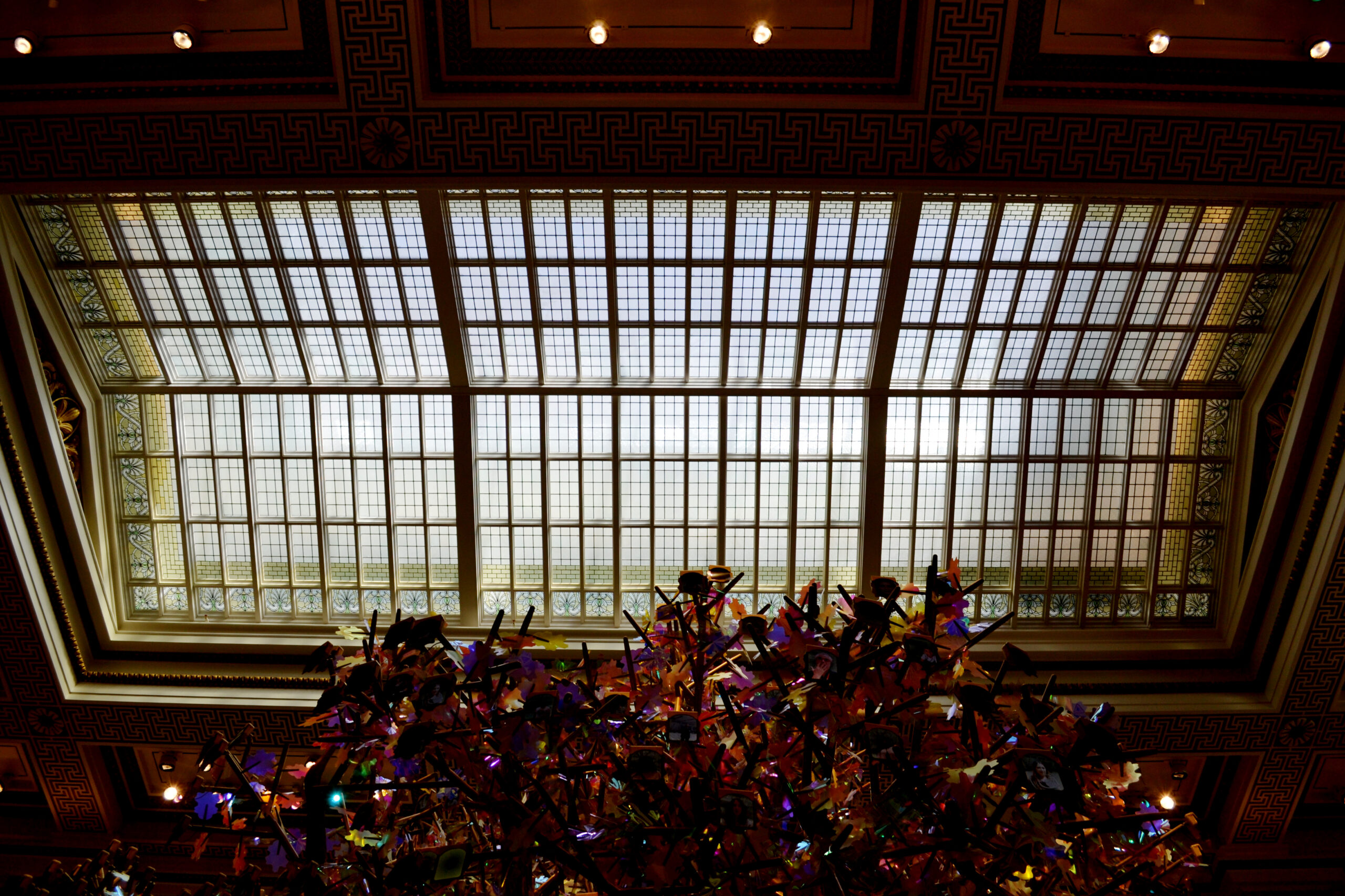
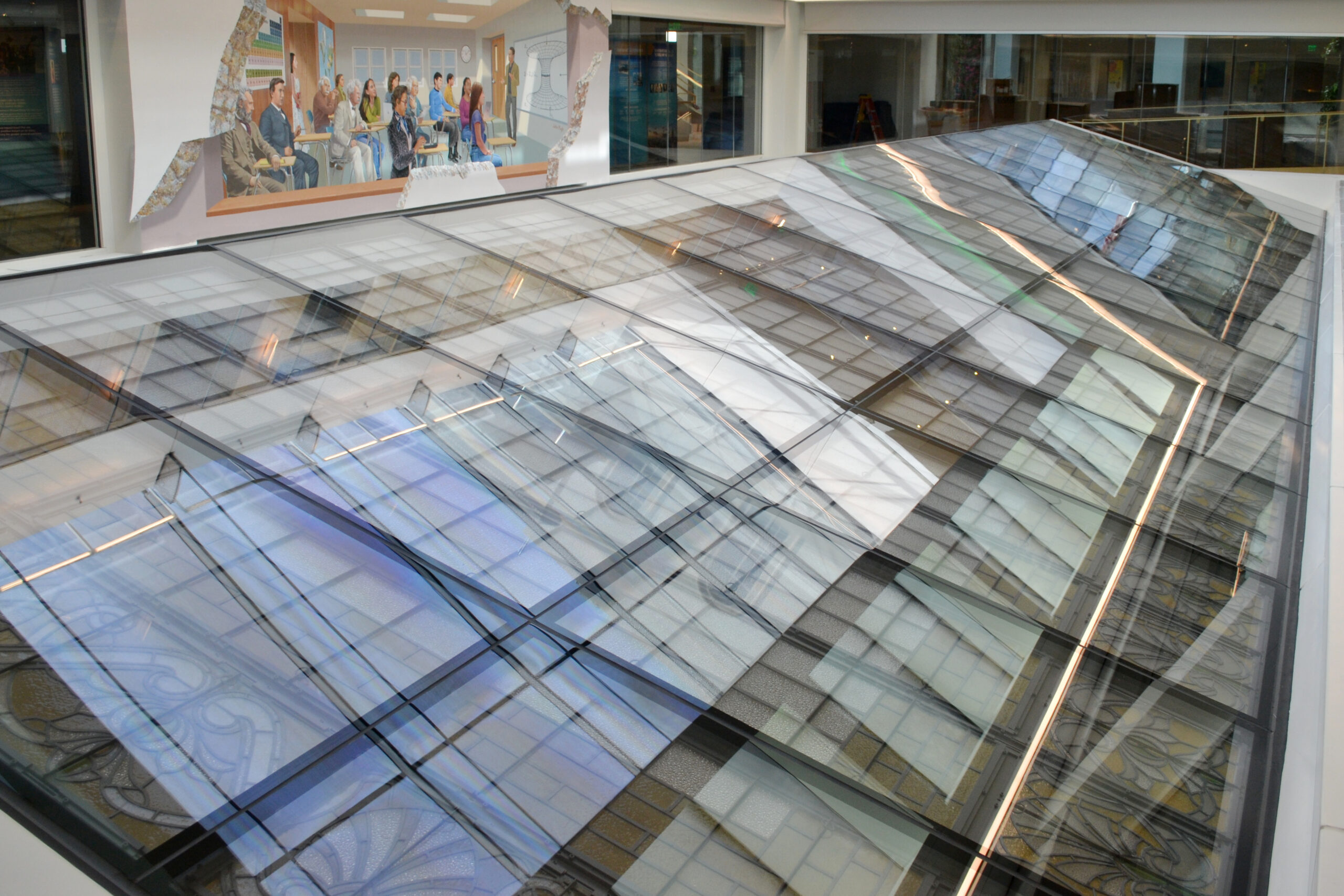
WEI played many parts in the renovation of the current MCAAD, including restoration of both aluminum and wood windows, restoration of the monumental exterior doors, eagle medallion, lampposts, and lastly, the stained glass laylight.
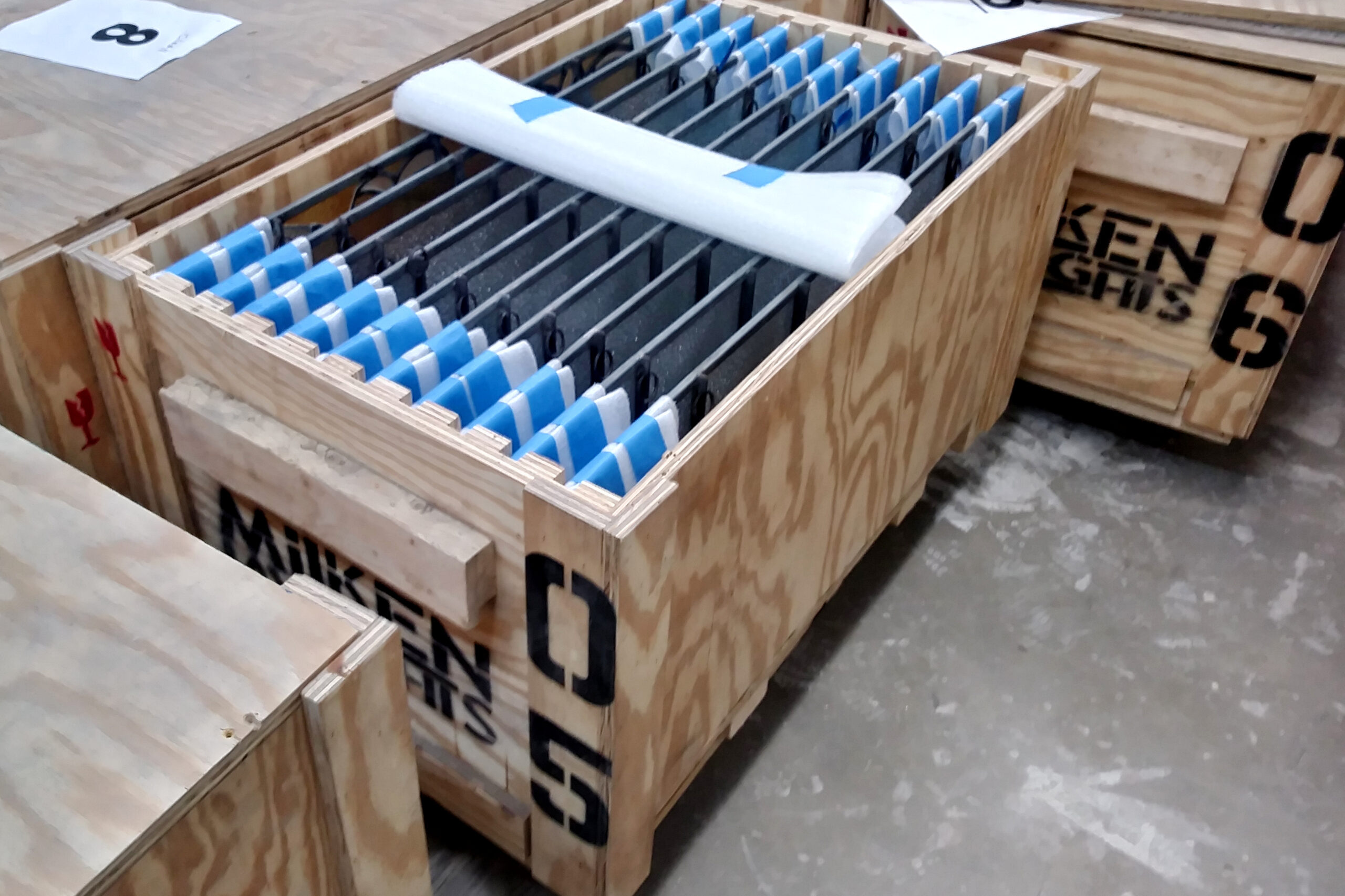
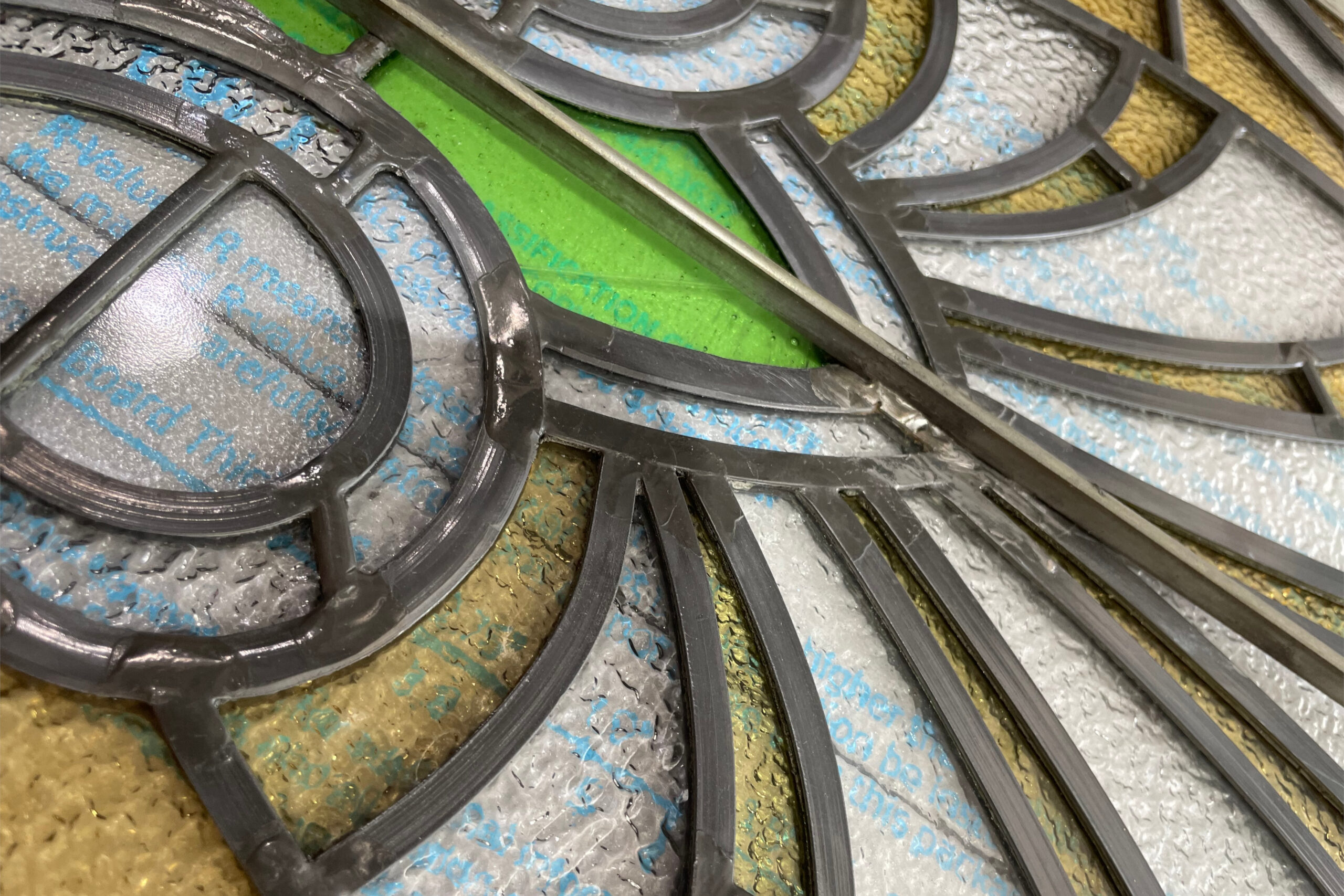
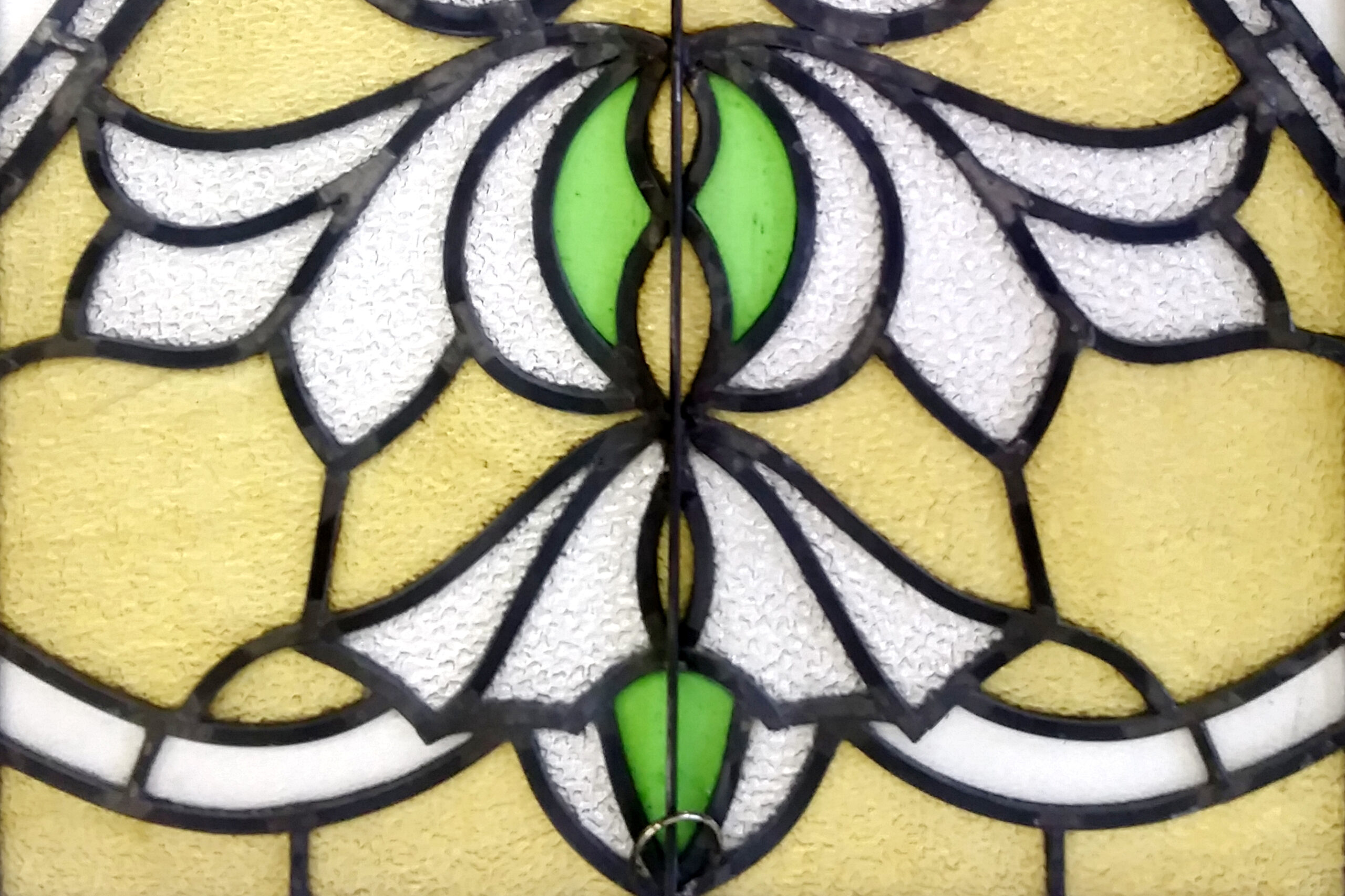
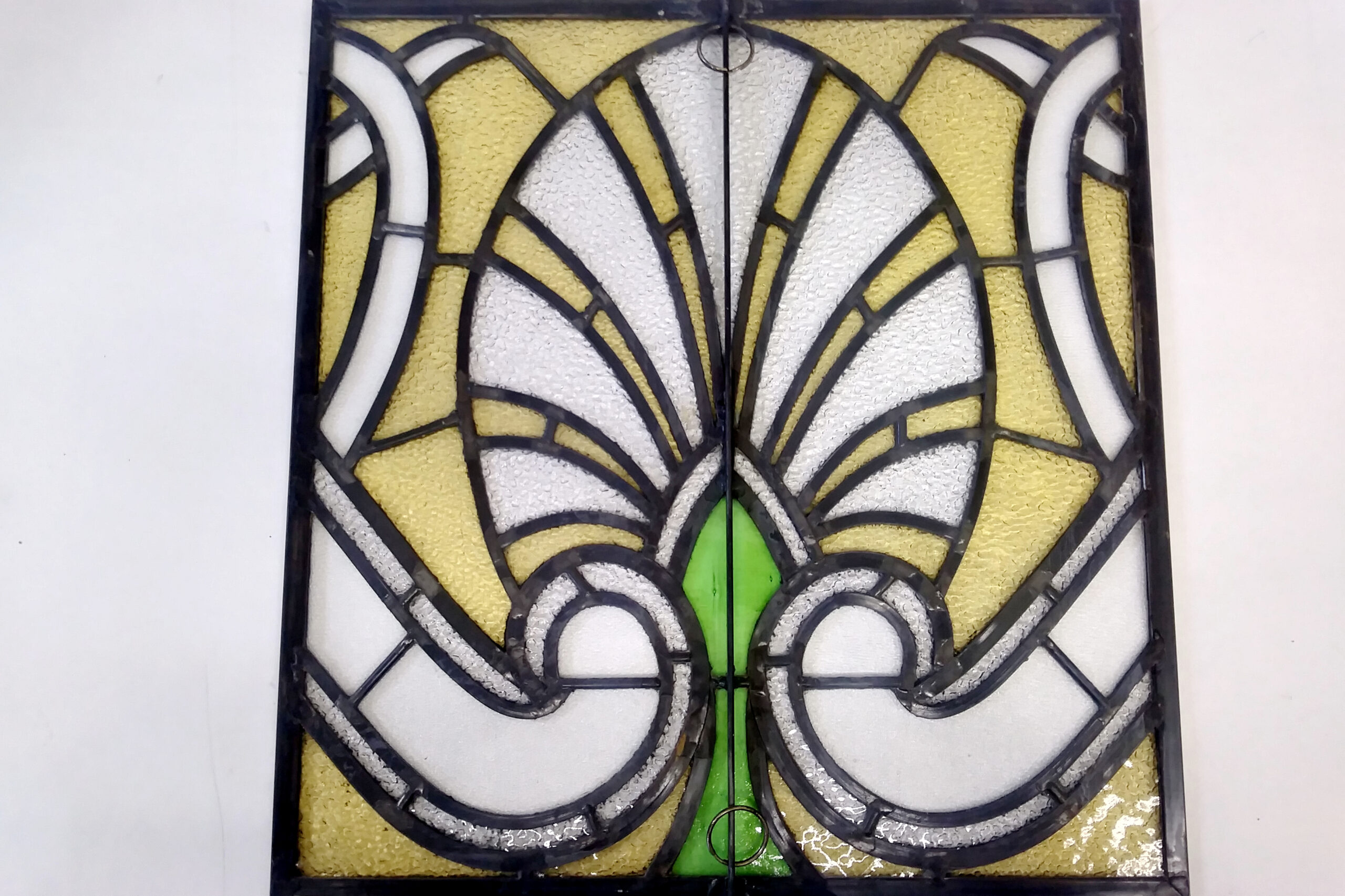
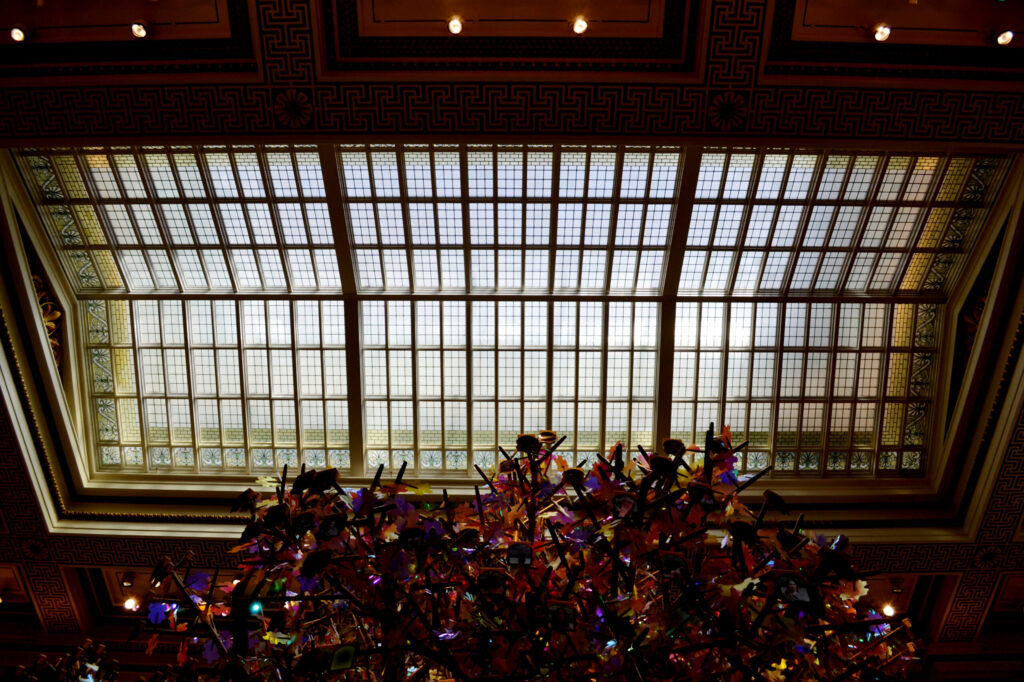
WEI removed and documented all 190 historic glass panels from the laylight frame and salvaged for reinstallation. Crates were designed and crafted by a team of WEI carpenters for safe transport to and from storage. Each panel was carefully vacuumed to remove debris, and delicately cleaned with a mild detergent, and wiped dry. Paint splatters were carefully removed from the beveled glass and then inspected for breaks, cracks, and missing panes. WEI worked closely with a stained glass artisan who manufactured 60 border panels that had been removed and discarded. Using the existing panels as a design reference, the new panels blend in seamlessly with the historic pattern. WEI repaired or replaced the damaged glass in the historic panels. All panels were then protected and stored in labelled crates, until the project was ready for the reinstallation of the laylight. WEI remained on the project to participate in the inspection of panels as they were being reinstalled.

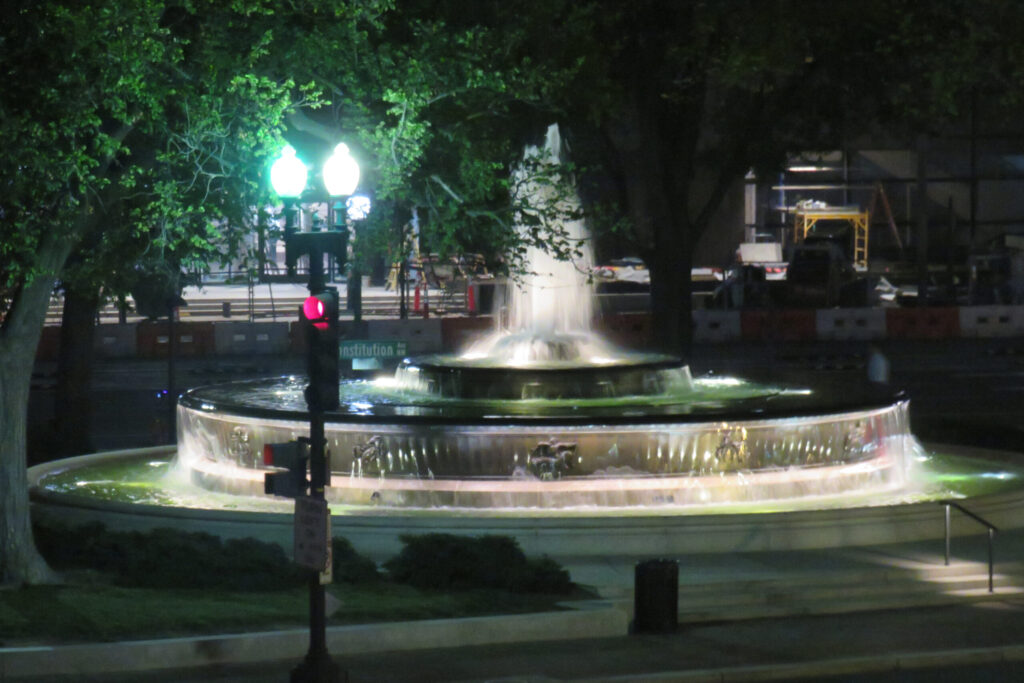
The fountain and plaza were recorded with laser scans to establish the locations and levels of the basins. The entire site was disassembled down to the concrete substrate, and the components catalogued before being transported off site for storage. The exposed concrete structure was repaired, covered with a new waterproofing layer and topping slab. The granite pavers of the plaza were reset on a new setting bed, pitched to shed water away from the center. Once the stone basin and fountain supports were reinstalled, the cast bronze pieces were returned and carefully reconnected in place. The finish was restored without removing the historic patina. Using the information gathered from the scans, the design team developed solutions to resolve issues inherent to the original constructions and WEI developed a reassembly plan that accommodated the tight horizontal tolerances required to recreate the fountain’s unique water sheeting effect.
The final piece of installation was recreating the floor of the bottom basin, meant to look like a river bed. WEI developed a method to install the concrete in small batches and install the surface stones by hand, with the proper reveal and a minimum of cold pour seams.
The WEI conservation team has been contracted since the restoration to perform seasonal maintenance for the bronze components.
Washington, DC
2025
Give us a call or contact us today to see how we can help with your project.
Site Created by Morebrite Agency