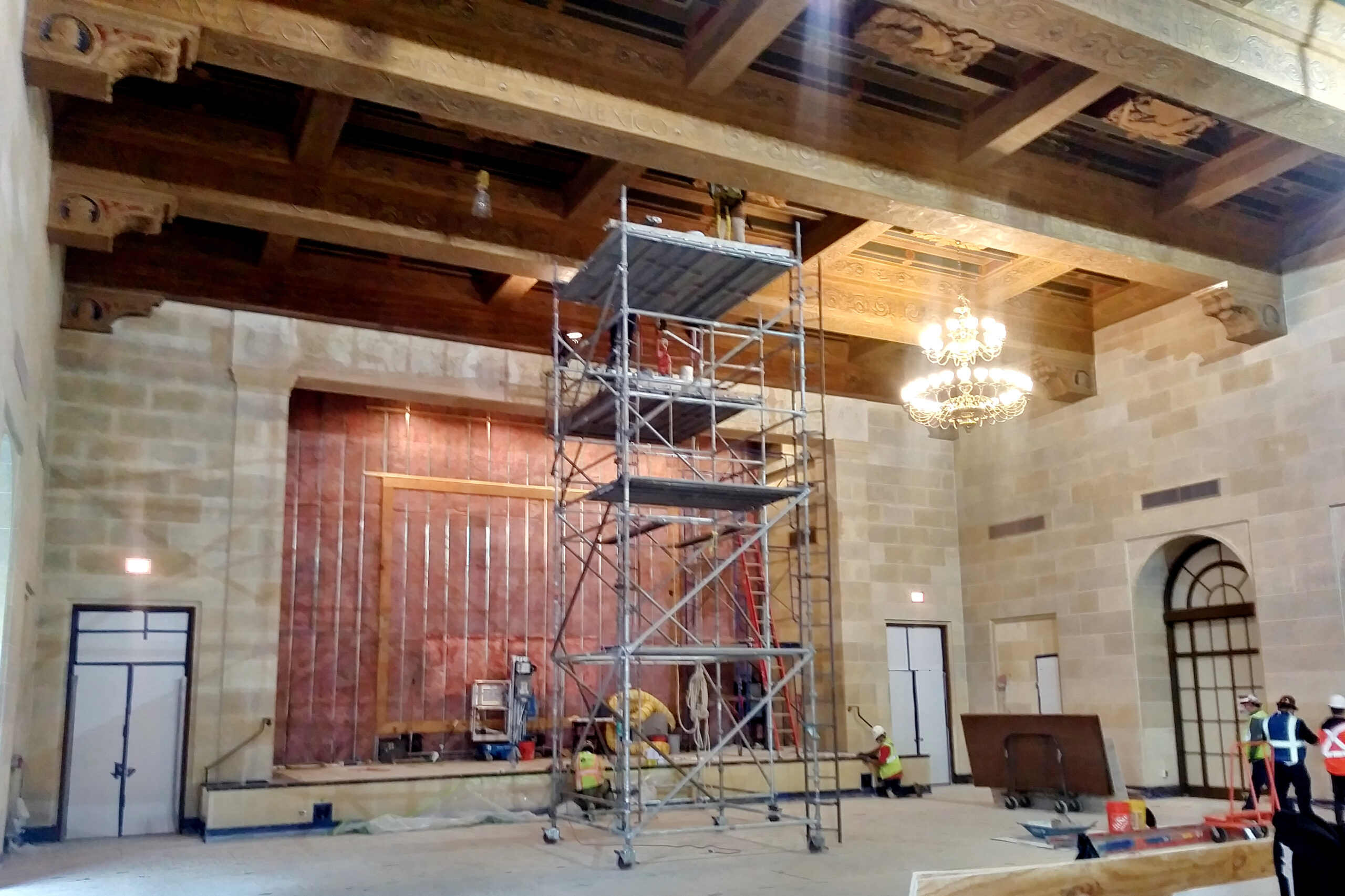
During a fire suppression and audio/visual upgrade in the Hall of Flags, WEI was contracted to clean the ceiling, make plaster repairs, and paint in touchups. Our conservator designed a cleaning procedure and sourced appropriate finishing materials.
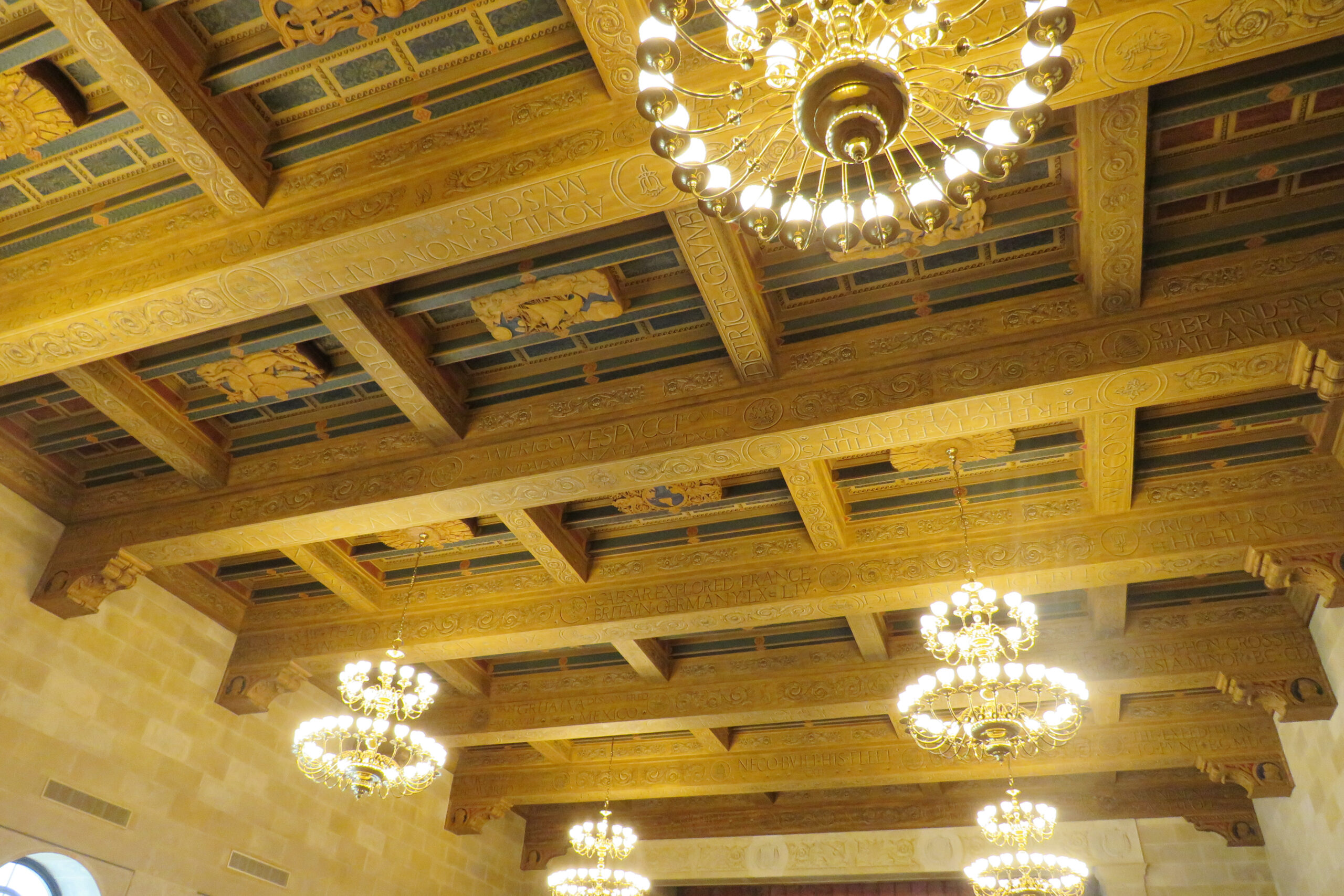
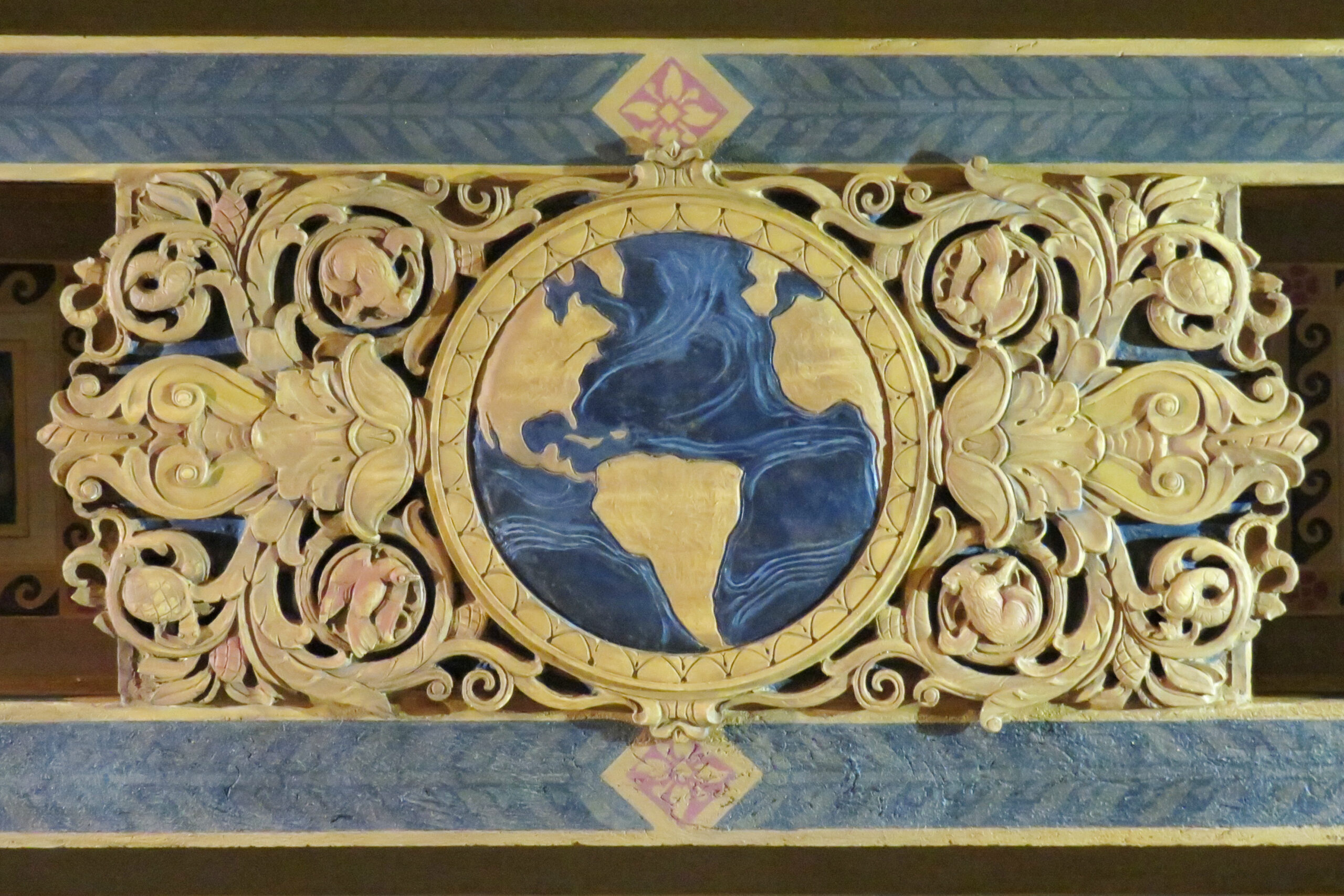
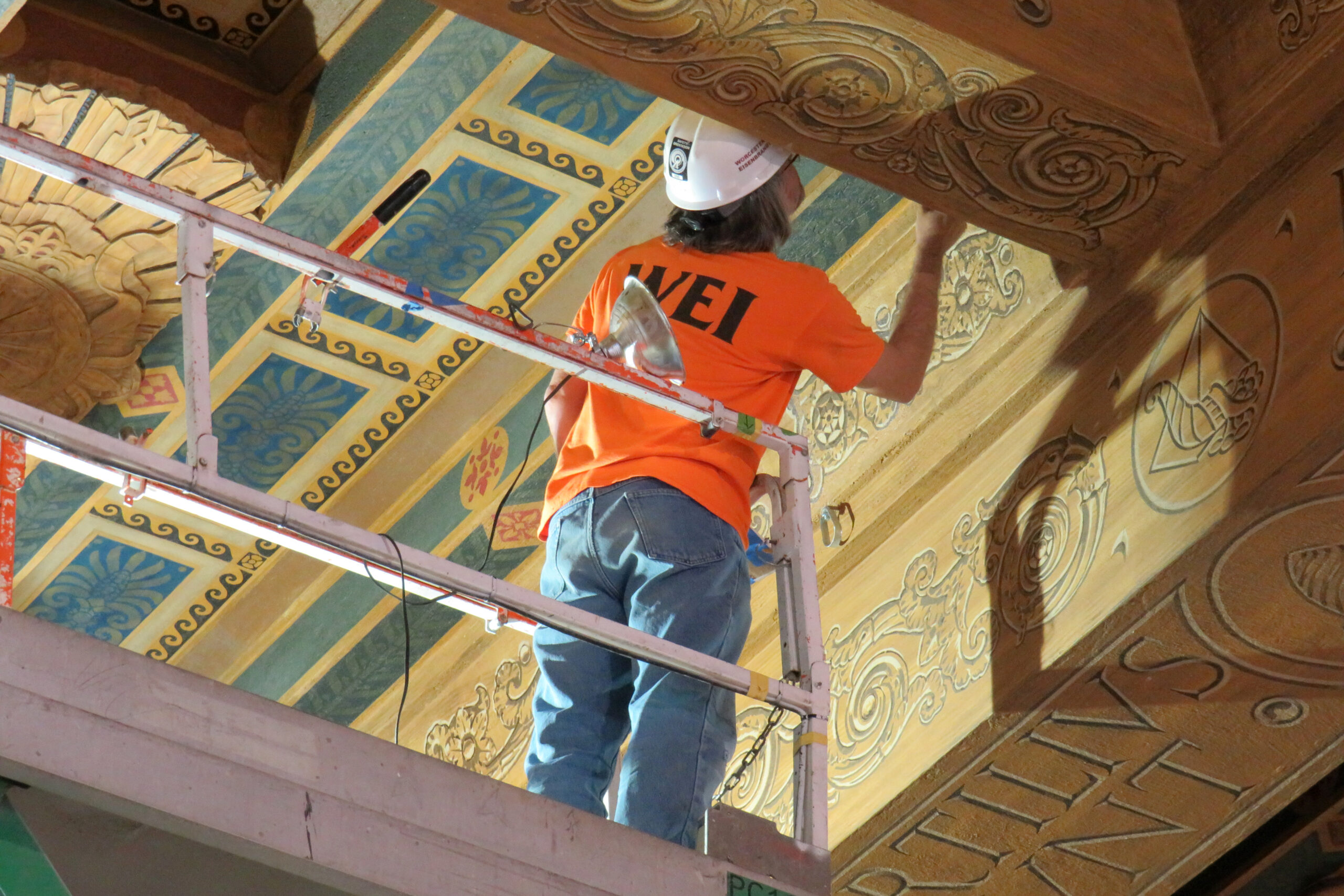
While completing plaster repairs, the WEI conservation and finishing team worked from rolling scaffold towers, cleaning 100 years of dust and nicotine residue from the painted surface of the textured ceiling, using sponges and a mild detergent with extreme care to avoid abrading any of the historic finish. Once the repairs were made and the painted surface was thoroughly cleaned, the team made a second pass to restore the ceiling mural, which included faux finish and trompe l’oeil techniques making the coffered plaster ceiling appear to be made from sawn timbers and carved wood.
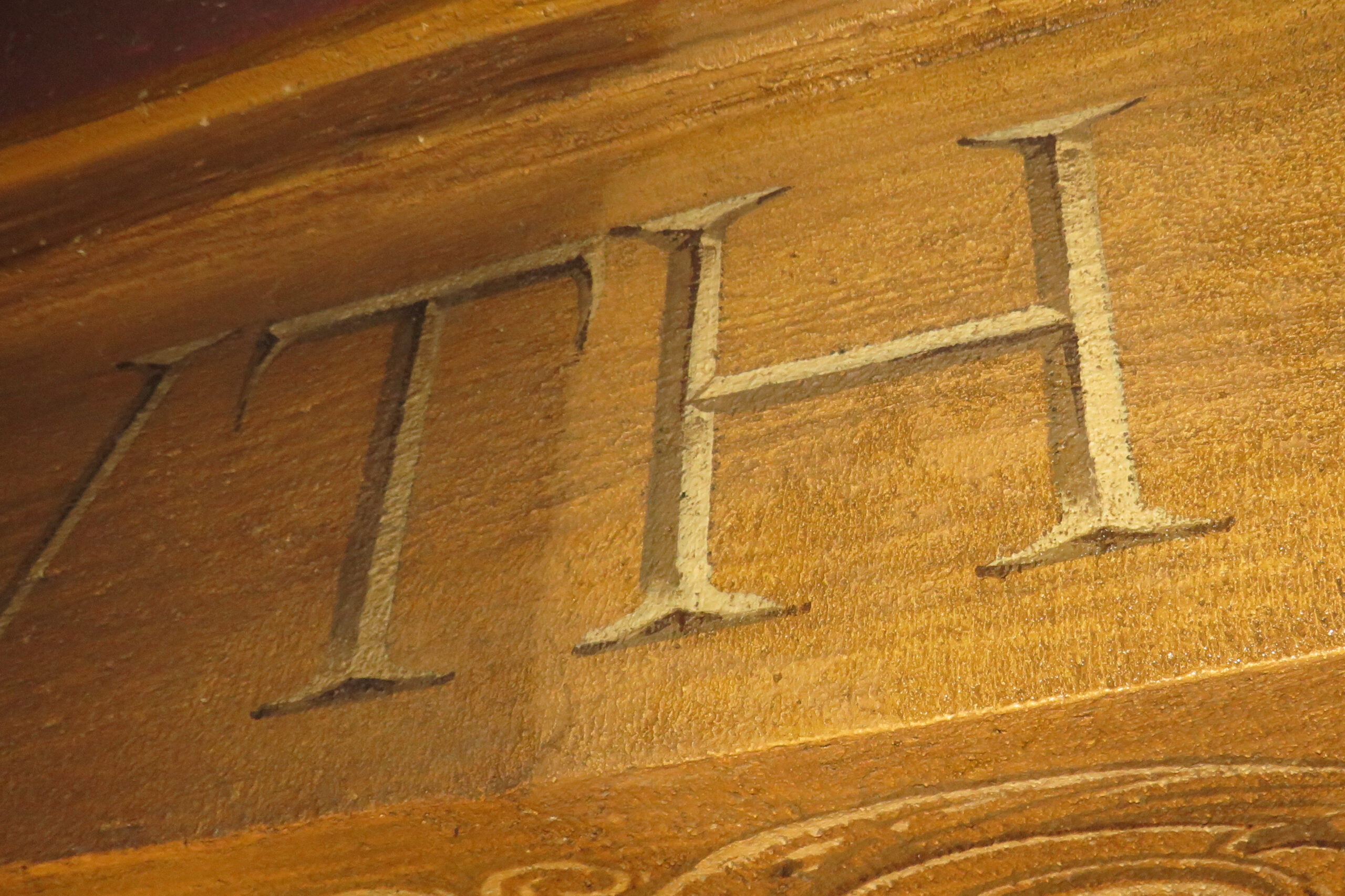
Each of the new plaster repairs needed to be textured and painted so that they blended seamlessly into the historic finish. These areas included old water damage, cracks, and the openings made in the cross beams and sides where pipes and hangers for a new sprinkler system were installed. WEI used traditional artist’s oil paints to faithfully recreate the color palette and techniques used a century ago to simulate wood grain and make the inscriptions and scroll work look like they had been carved into the surface.
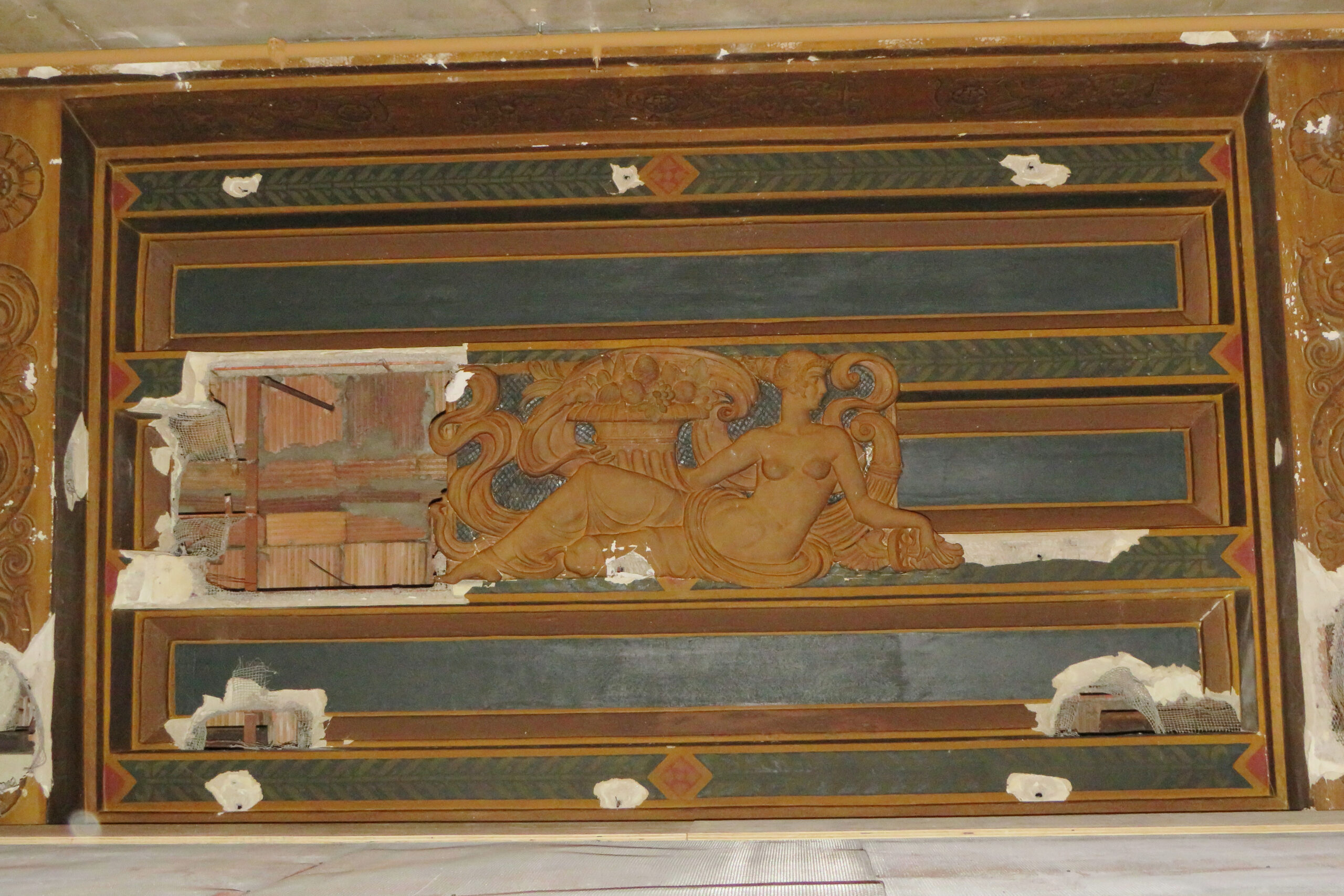
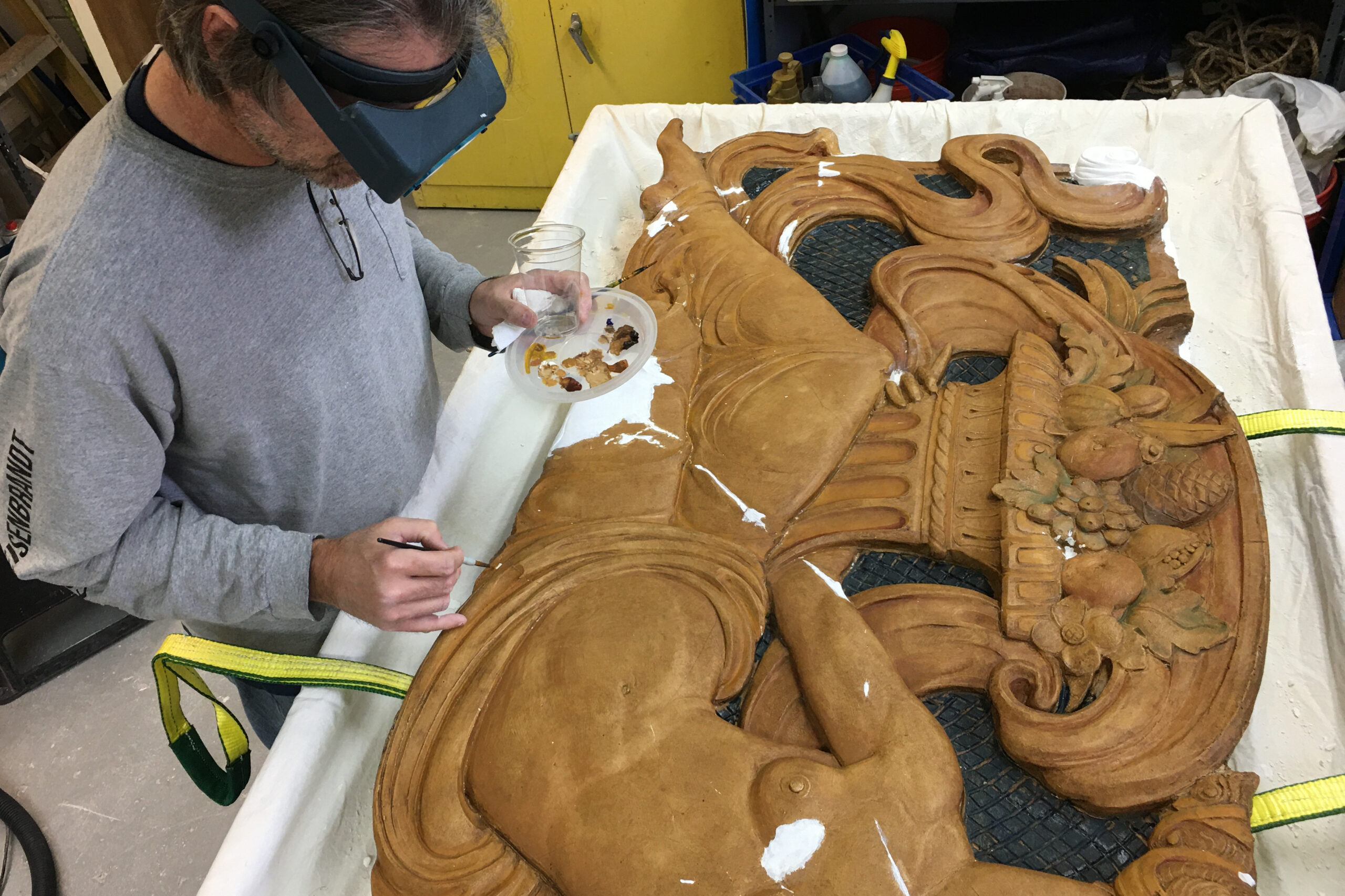
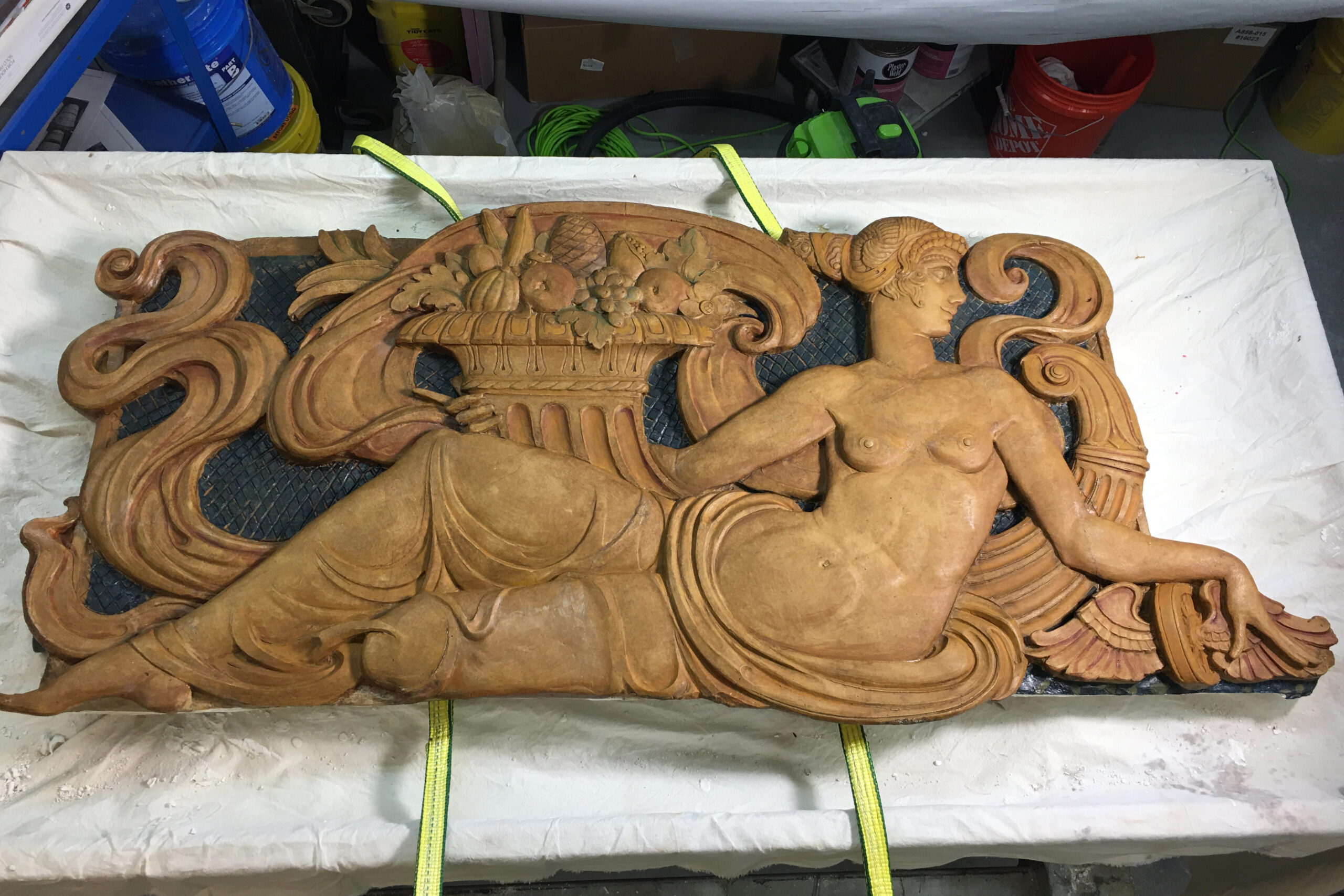
During construction, it was discovered that a dropped ceiling over the stage had been concealing part of the original coffered ceiling for decades. Because it had been significantly cut into by conduits and lighting supports, the decision was made not to restore the ceiling, but the unique sculpted centerpiece was removed and restored by WEI for later display by the Chamber of Commerce.