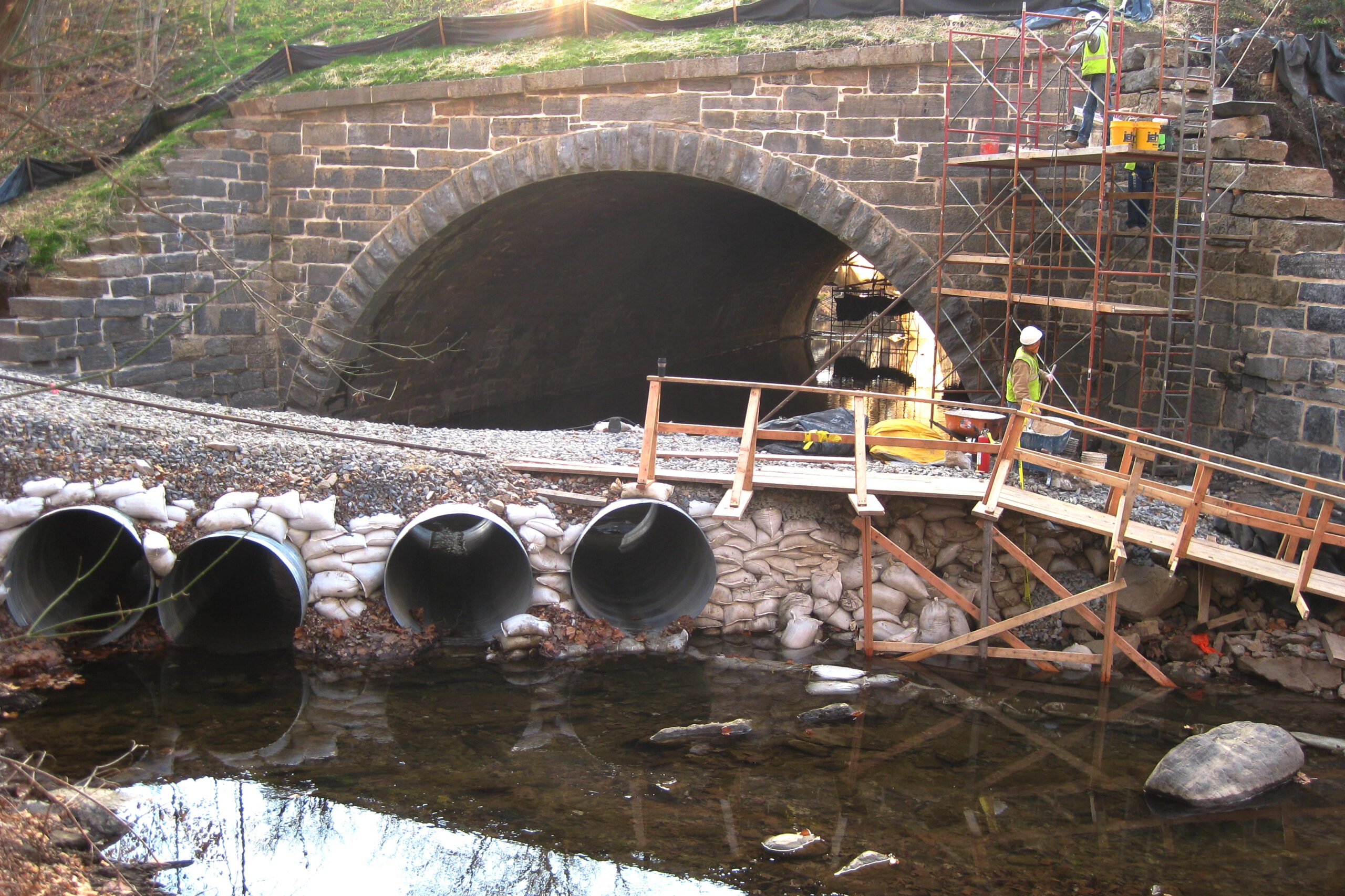
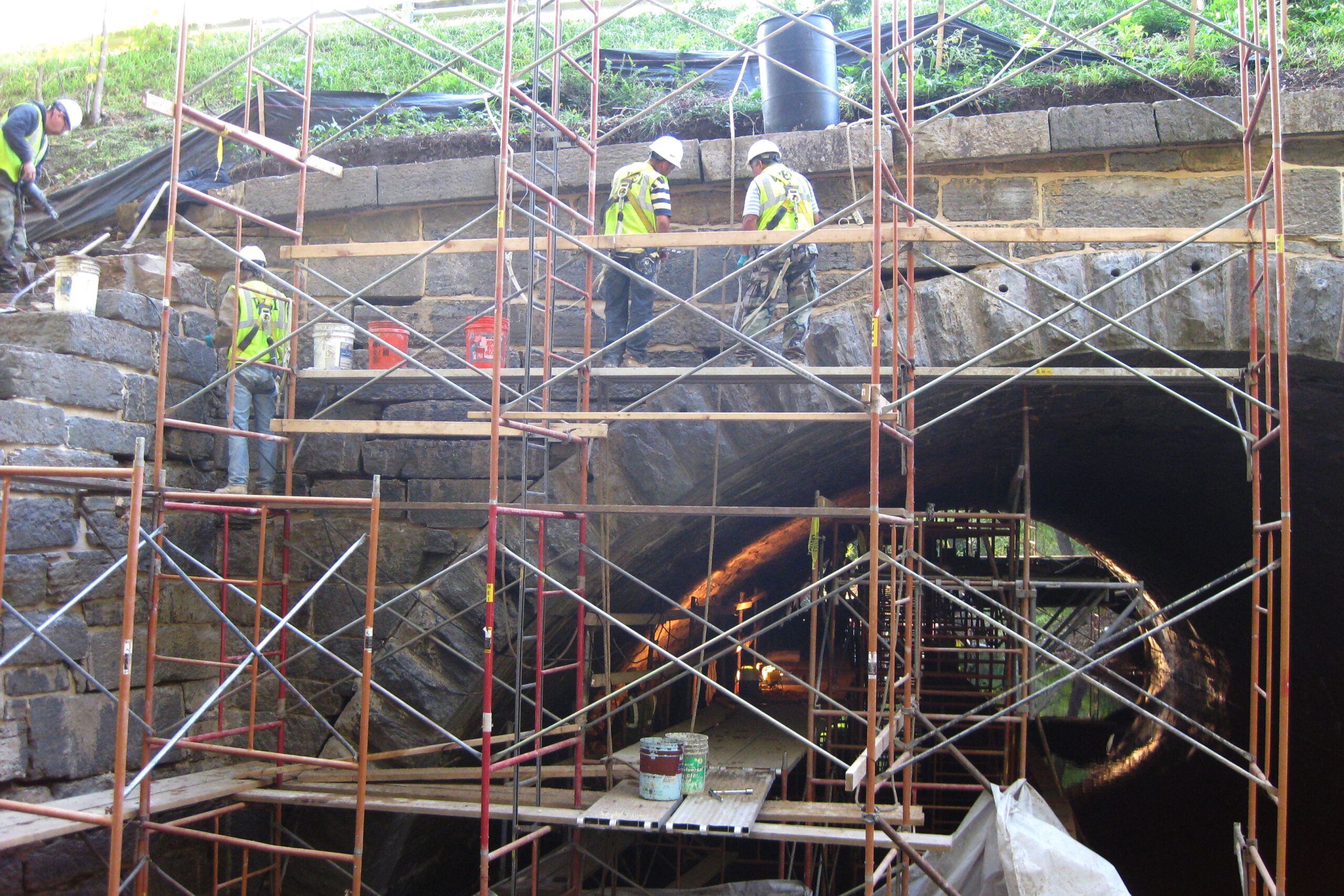
The National Park Service retained WEI to stabilize the culvert structure and reline the canal prism with a synthetic liner—work that required diverting the Little Tonoloway Creek. Prior to beginning repairs on the culvert itself, WEI built temporary access roads to bypass the culvert bridge and the construction area. Extensive sediment and erosion control was required because of the proximity of the earthwork to Little Tonoloway Creek and C&O Canal. The effects to the natural environment were mitigated at all times.
The stream was diverted, one half at a time, so that the 500-foot section of the canal bed could
be reshaped and an underdrain system installed. WEI also installed concrete termination walls and a new PVC liner system before putting the clay bed back in place.
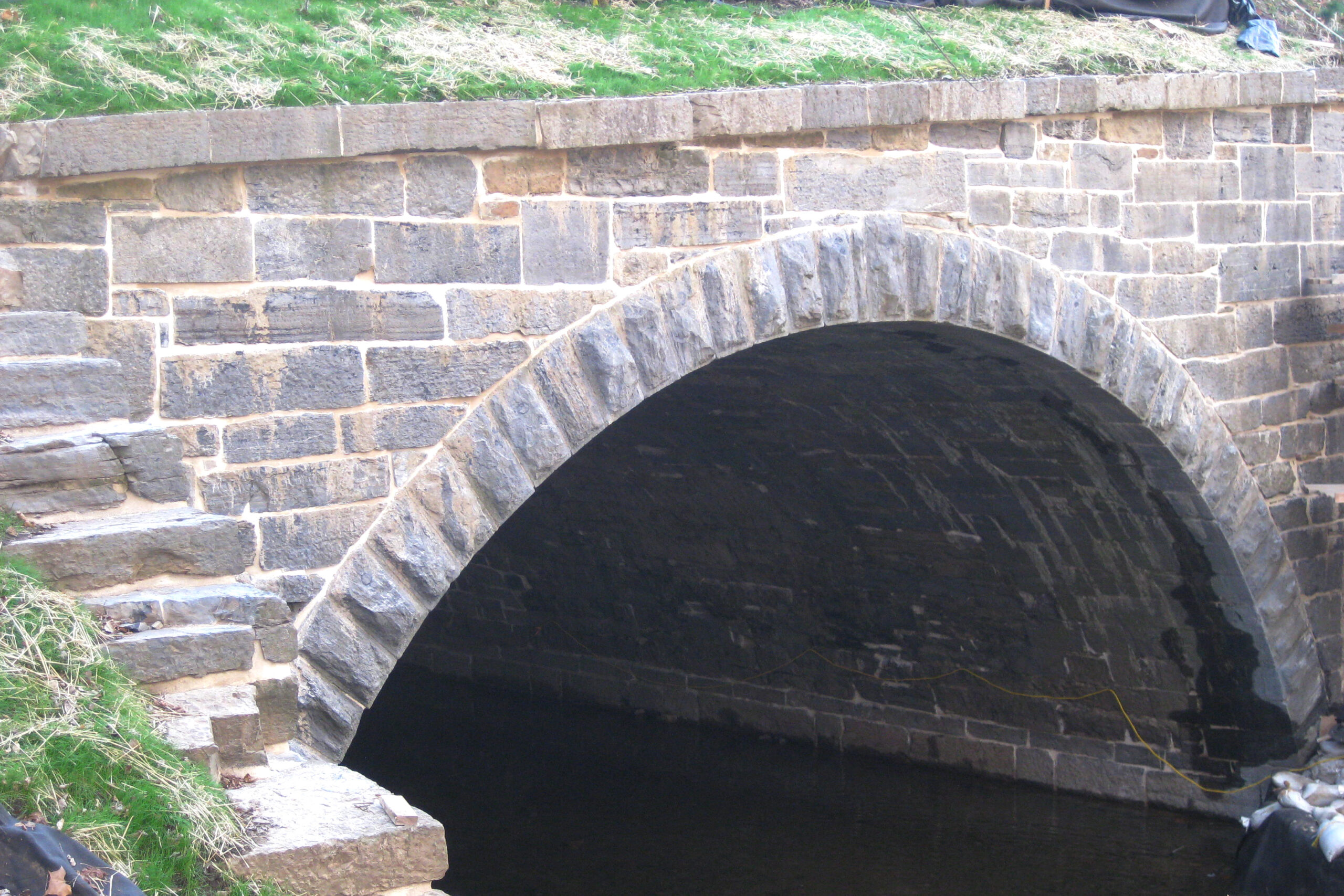
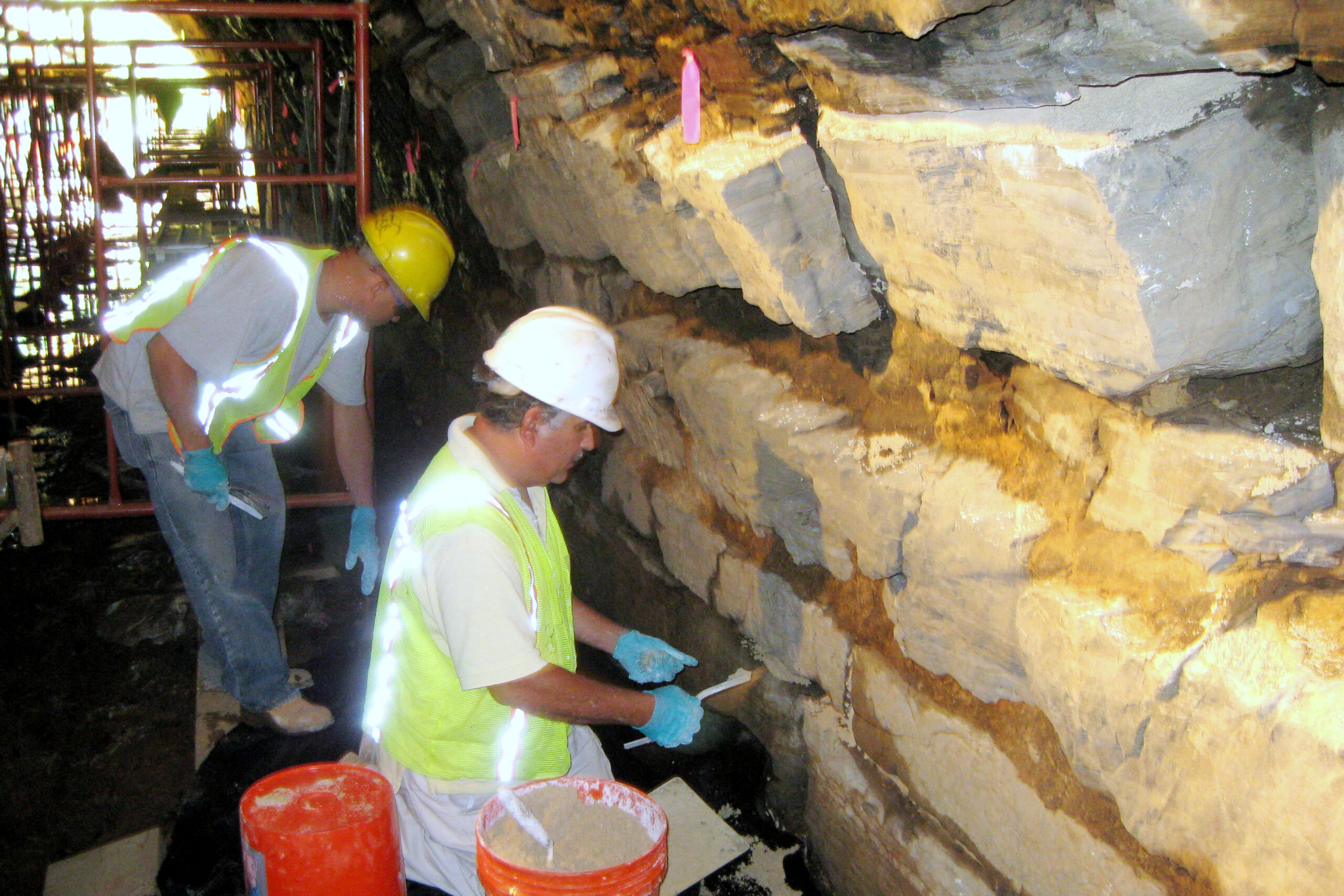
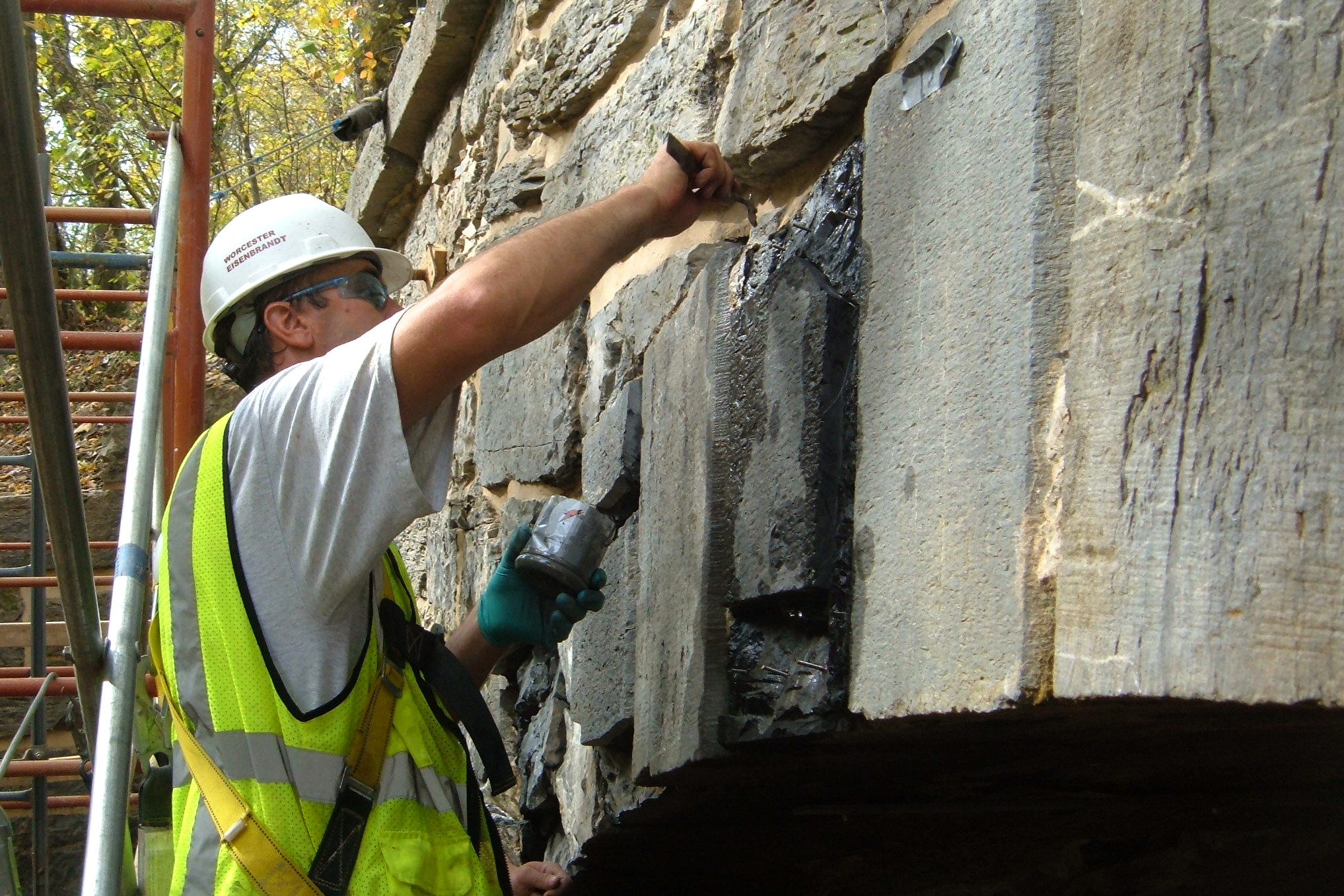
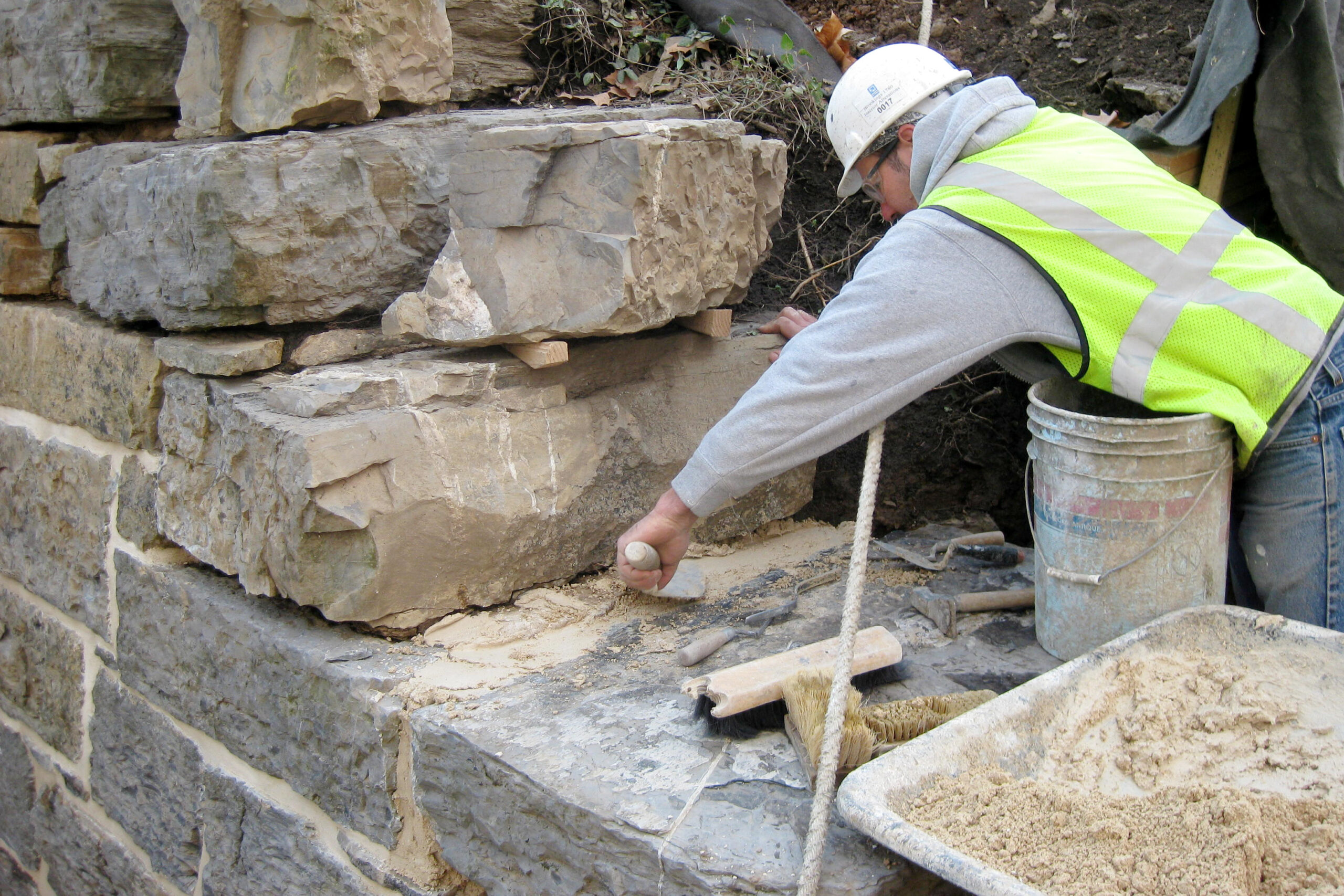
Work on the culvert included vegetation removal, localized disassembling of the stonework and repair of the concrete liner. Existing cavities and voids in the culvert were filled with a cementitious grout, and stone repairs were made, including patching, pinning, epoxy injections, repointing, and resetting. Stones that were beyond repair were replaced, including a great deal of infill at the interior lining of the arch, which required careful shaping and installation for structural soundness. WEI also rebuilt two cheek walls at one end of the culvert, which included reconstruction with existing stone as well as some replacement, and installed steel straps to stabilize the other end of the culvert. There was a considerable amount of earthwork to provide erosion and settlement control, entailing removing material and reshaping the existing canal bed.