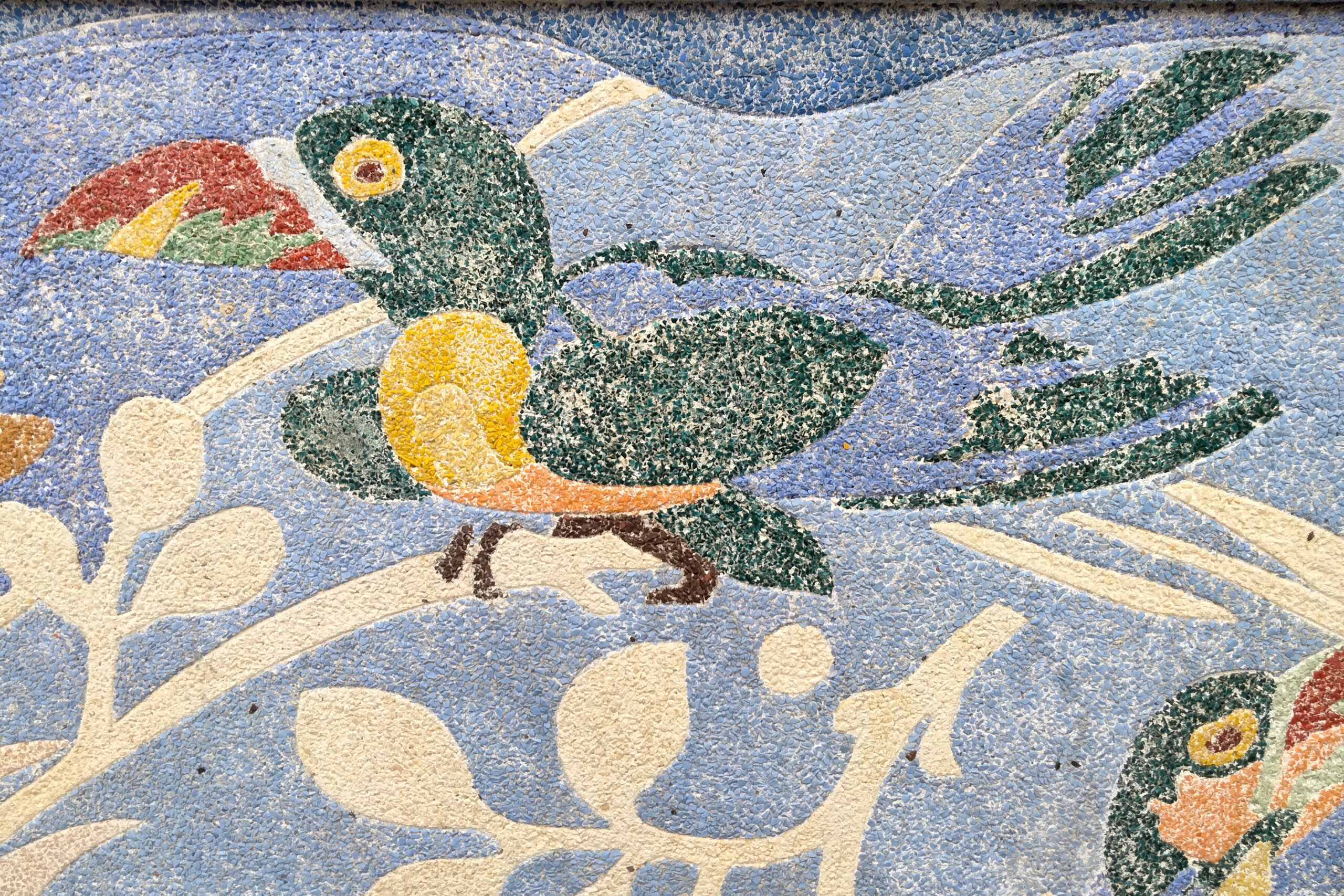
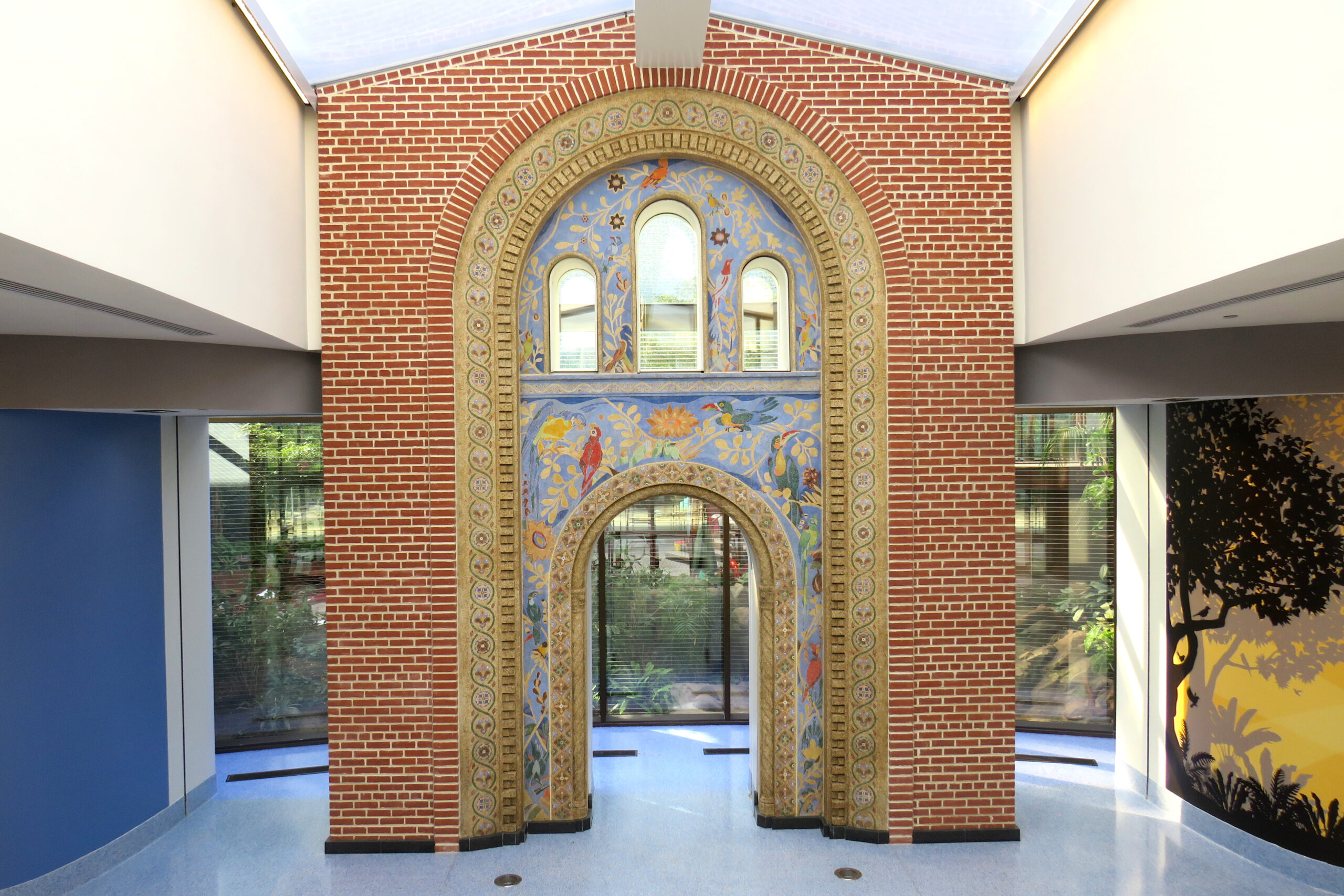
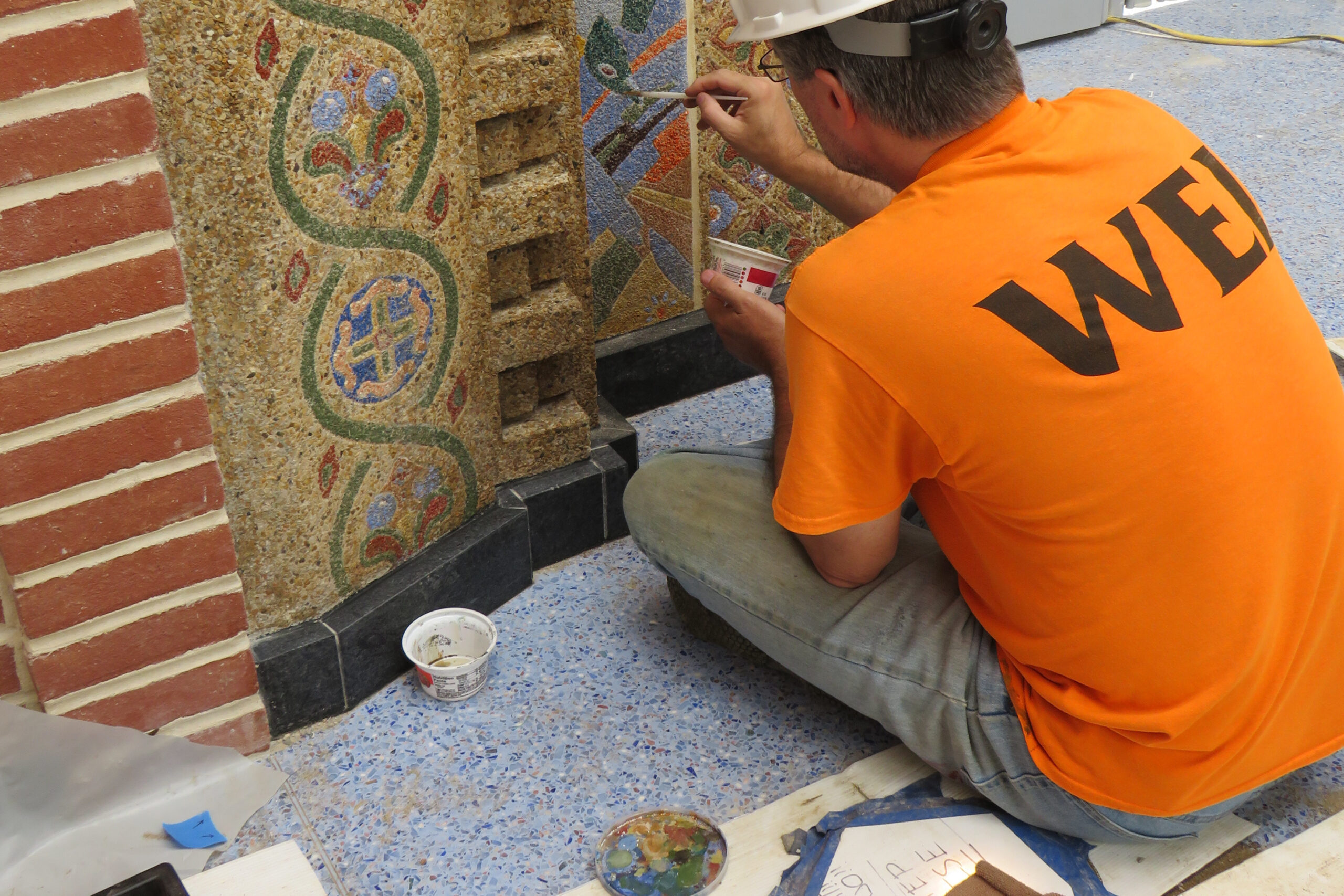
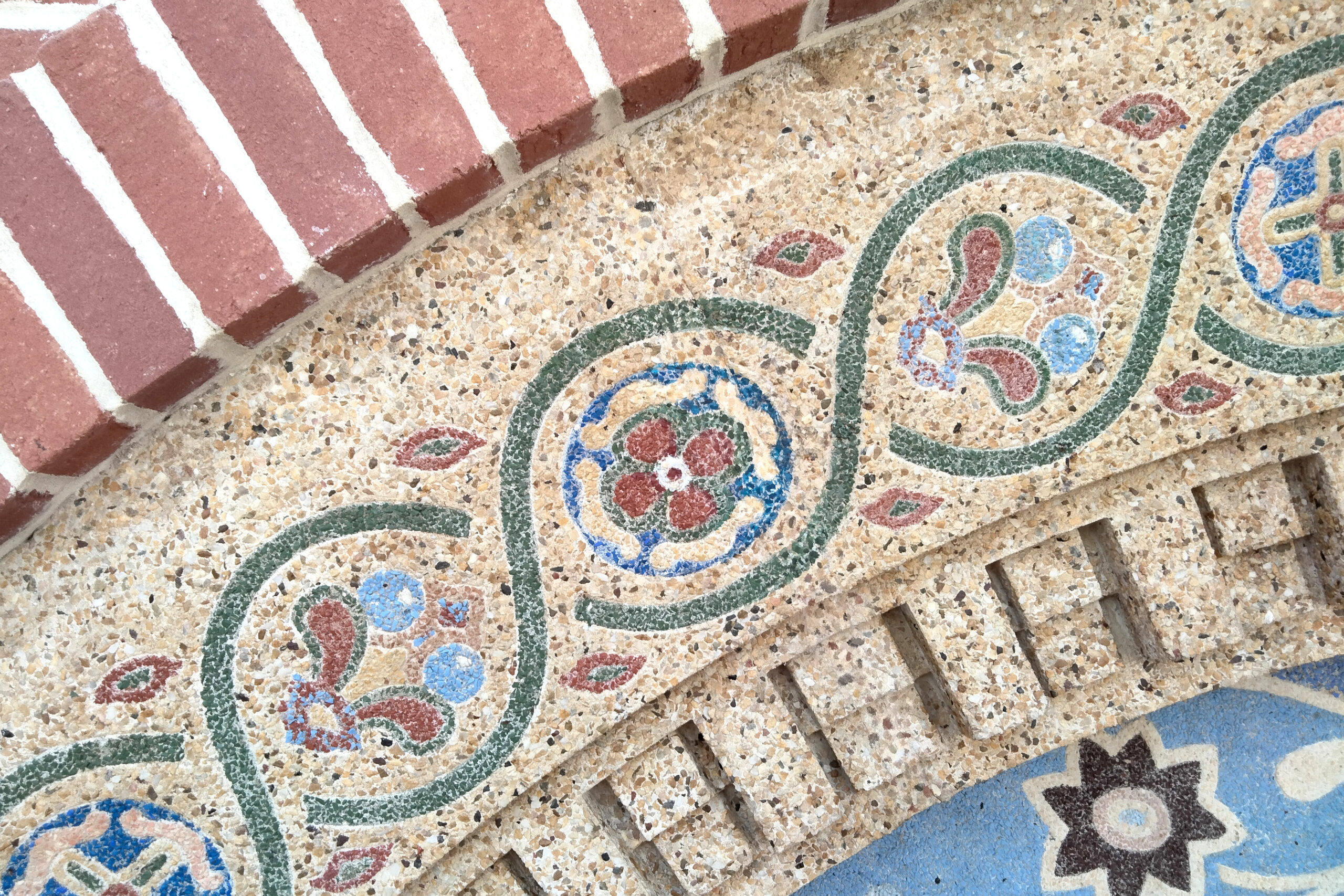
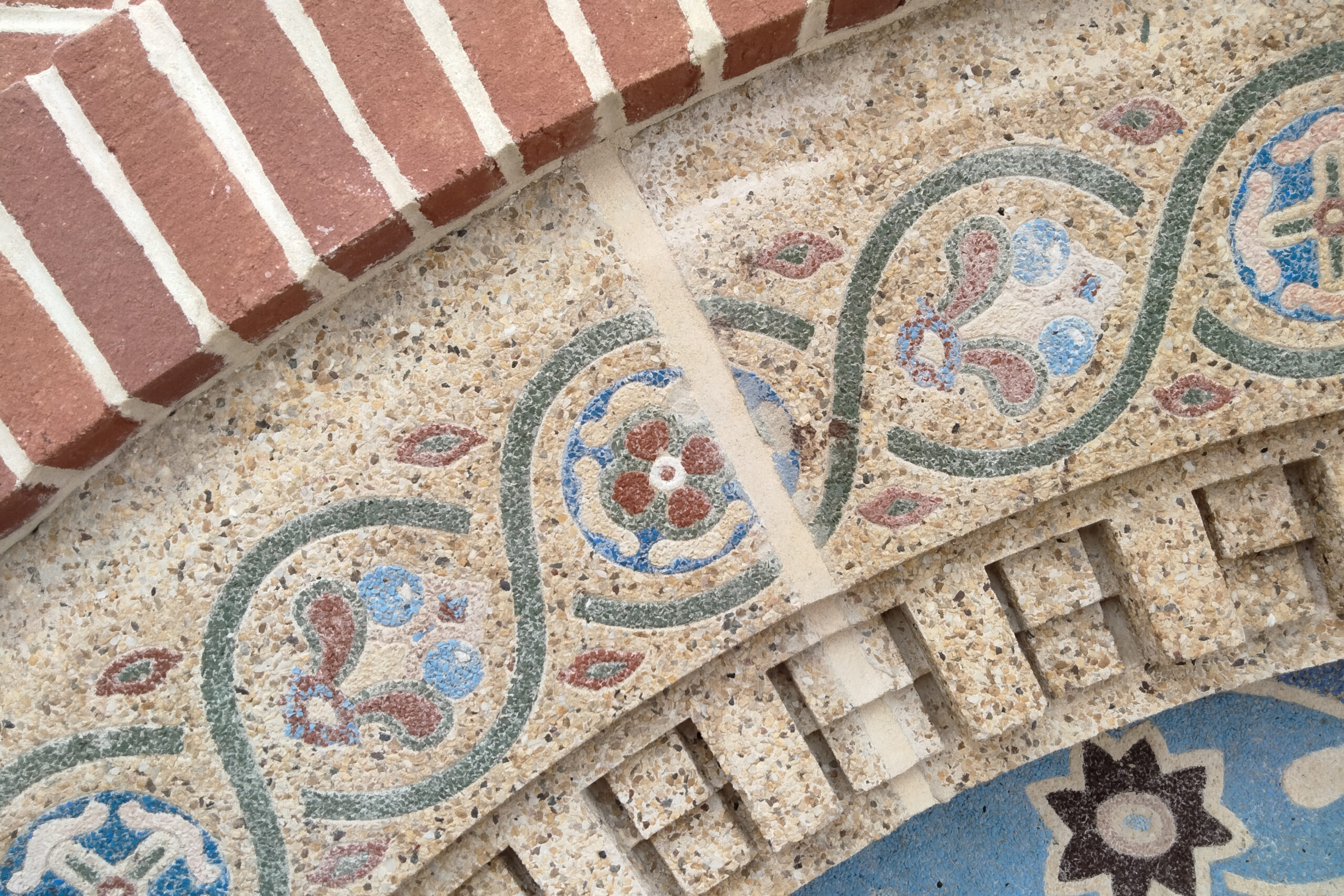
The conservation team at WEI was contracted to survey the arch for any damage and perform a sympathetic restoration of the surface. The survey documented a series of hairline cracks, missing aggregate, cementitious splatter, paint drips, ferrous staining, and previous repair campaigns. The team conducted a series of product tests before cleaning the surface and removing the stains. Areas of material loss were color matched and patched with restoration mortar to blend with the surrounding area. More extensive conservation treatments were necessary at the bottom where a concrete curb had originally been poured against the arch border. Conservators carefully removed the bulk of the cement with Dremel tools before dislodging the material within the mosaic using dental tools and small blades. Some cement fragments were left in place out of caution to avoid accidentally damaging original material.
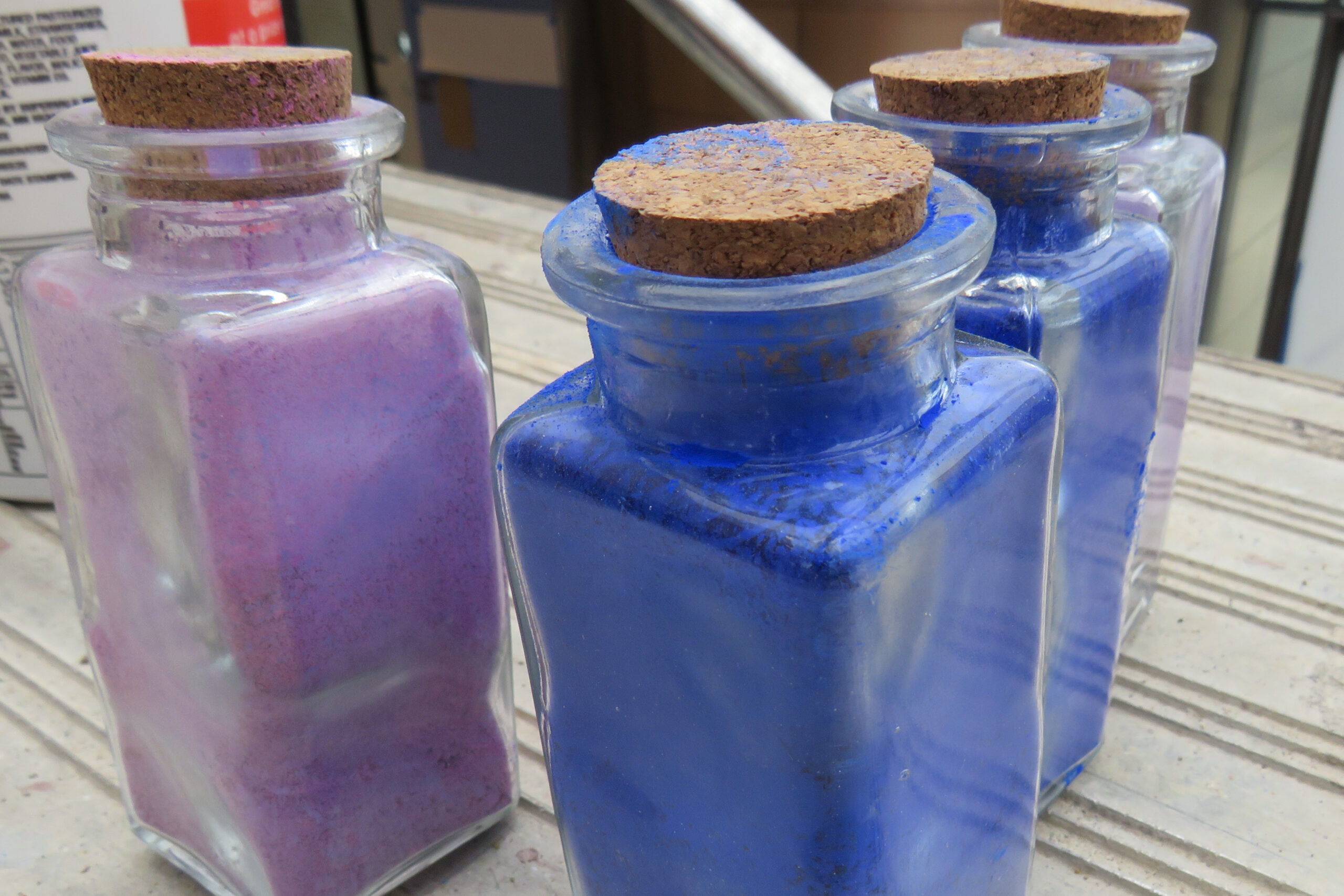
The final treatment consisted of multiple reversible varnish techniques. Because the aggregate had weathered and dulled on the building’s exterior, WEI applied a clear varnish to the stones while avoiding the concrete matrix beneath. This restored much of the original vitality to the mosaic and brought back several color effects that had become obscured. WEI artists then used pigments suspended in the same varnish to compensate for missing aggregate and camouflage the concrete remainders at the bottom.
Due to the sensitivity of the birds who would be moved in shortly after treatment, every effort was made to ensure that the products used would either not be harmful to them at all, or any VOCs would fully dissipate before the new residents arrived.
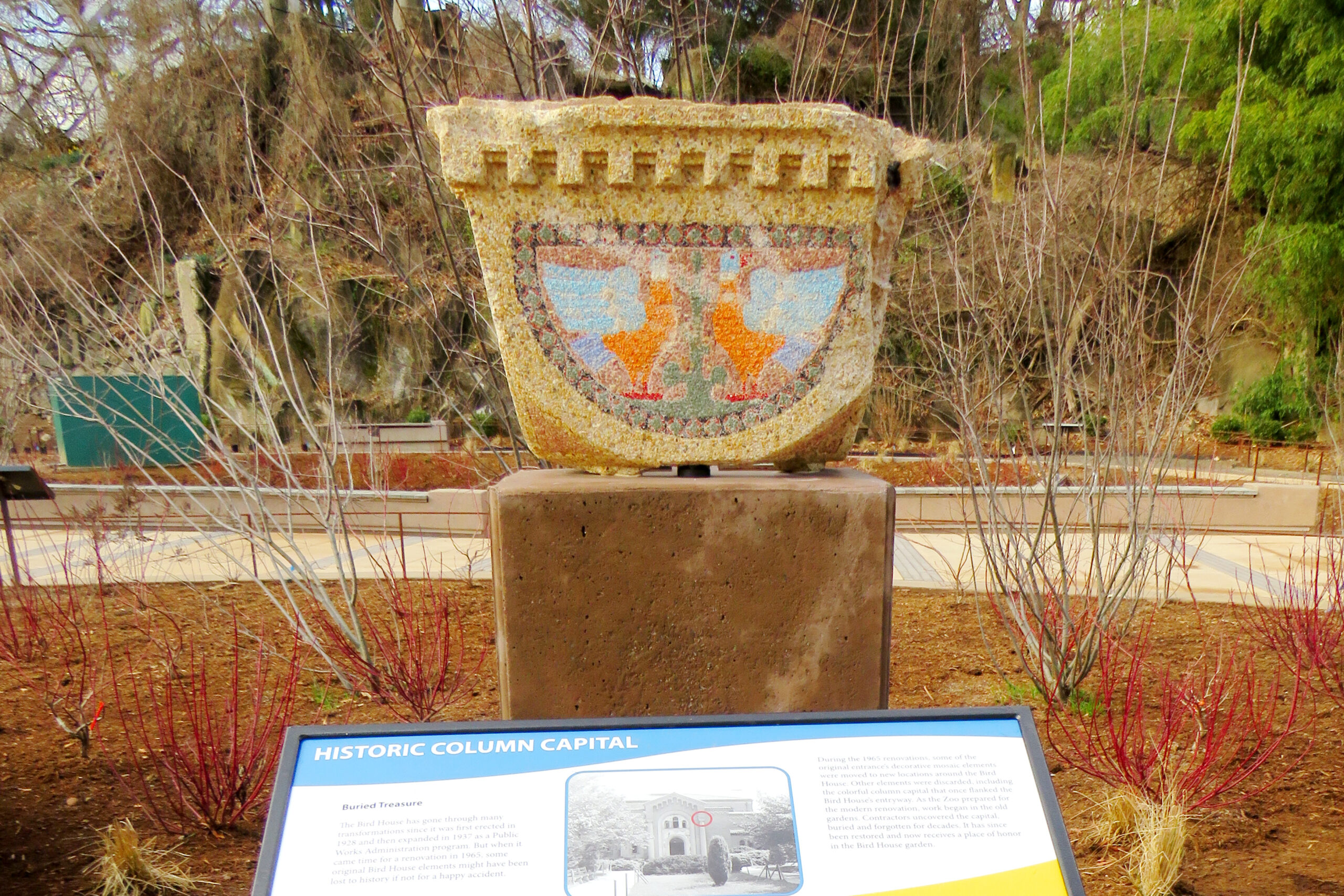
During MEP excavations, one of the original column capitals was recovered, albeit slightly damaged. The conservation team cleaned and prepared the capital for exhibition outdoors. Exposed rebar was cleaned and coated, and a small amount of repair mortar was used to keep water from collecting on the interior. WEI then provided a pedestal to match the surrounding benches and installed the capital.